Tutor Scheduling Software
Student-first scheduling with time zones, recurring lessons, group sessions, lesson packs, upfront payments, reminders, & lesson notes.

Scheduling features for 1:1 tutoring and batches
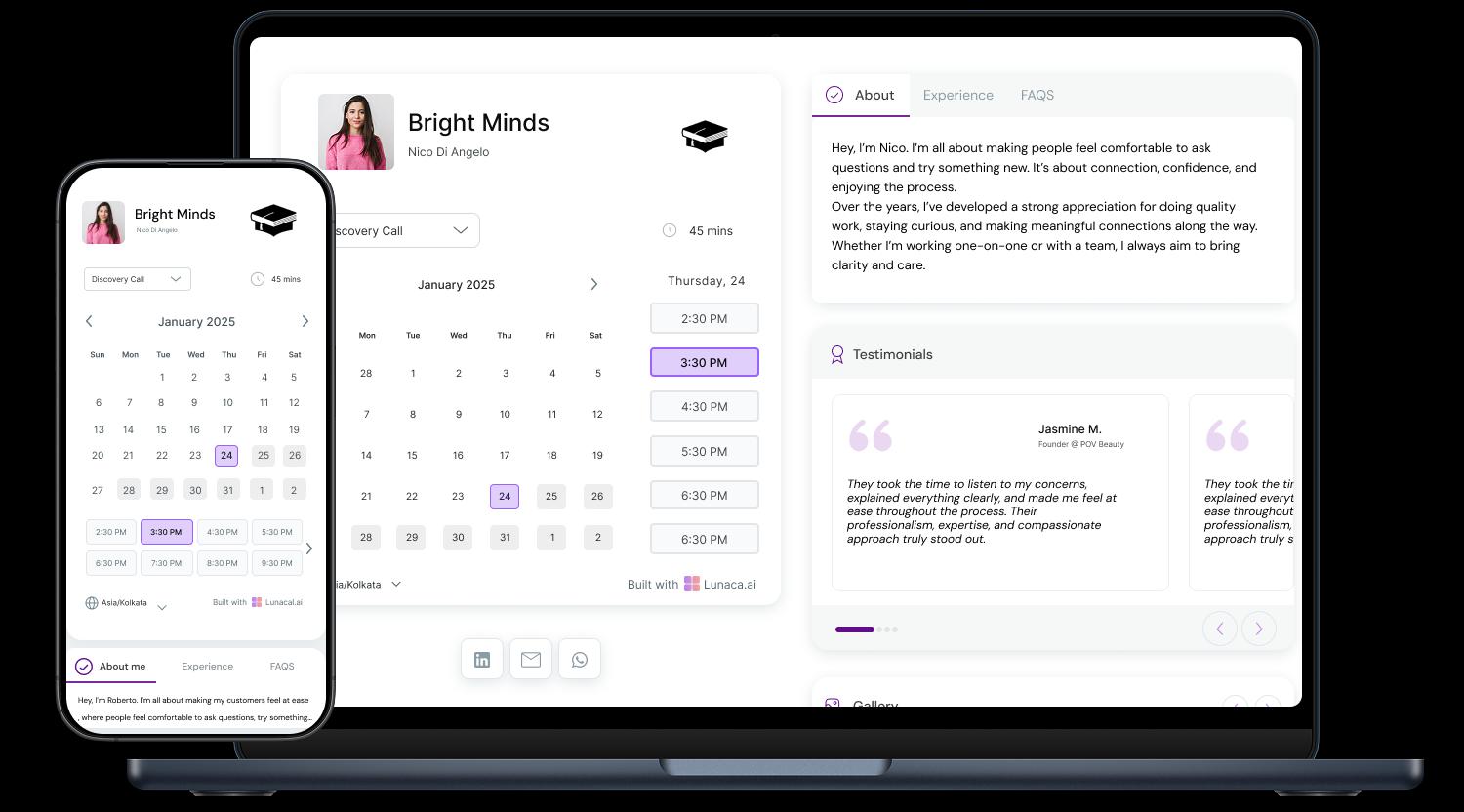
Students and parents book instantly, with clear confirmations
The booking should feel like buying a movie ticket: pick a slot, confirm, done. Parents especially hate “can you do 6pm?” back-and-forth. Instant confirmation + timezone-safe calendar invites remove uncertainty, and you start the relationship looking organised instead of scattered.
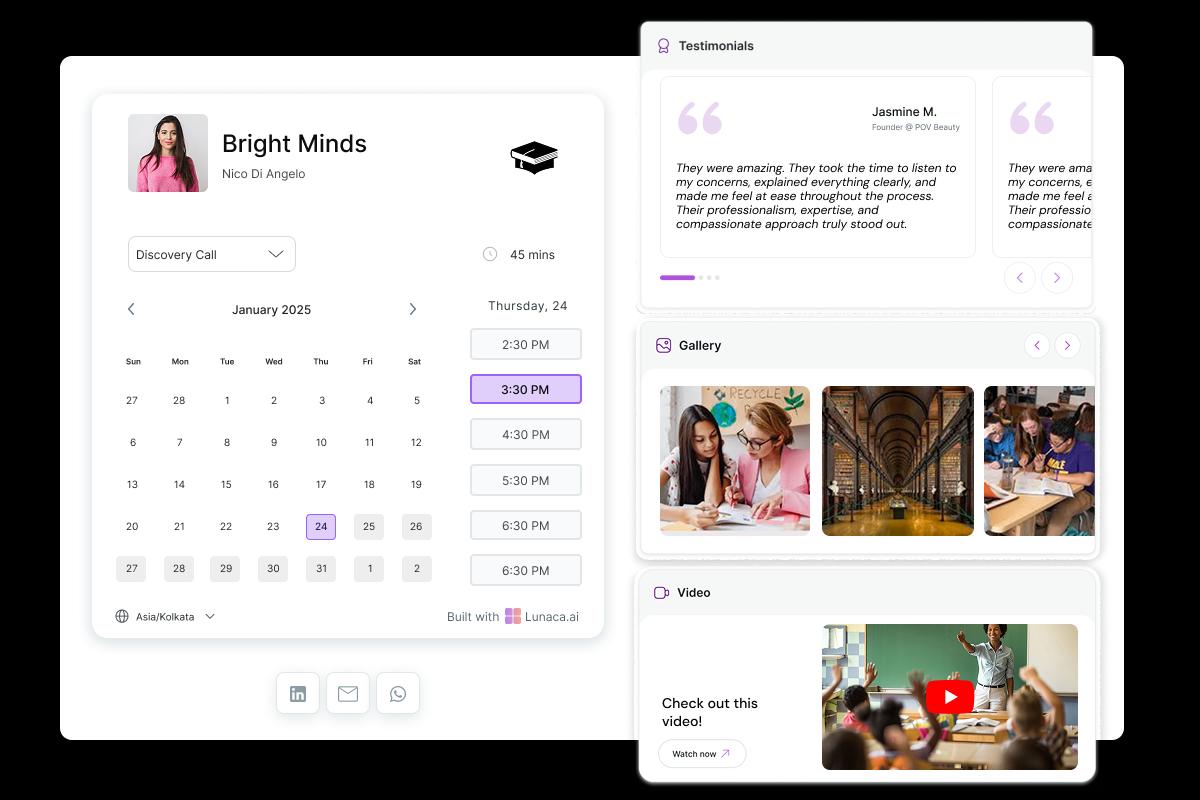
Show outcomes, credibility, and your tutoring style upfront
Tutors don’t get picked on vibes. They get picked on proof. Show real outcomes like grade jumps, exam results, or “student went from struggling to confident” stories, plus short testimonials from parents or students. Add your photo, approach, and what you specialise in so the right students book and the wrong ones self-filter.
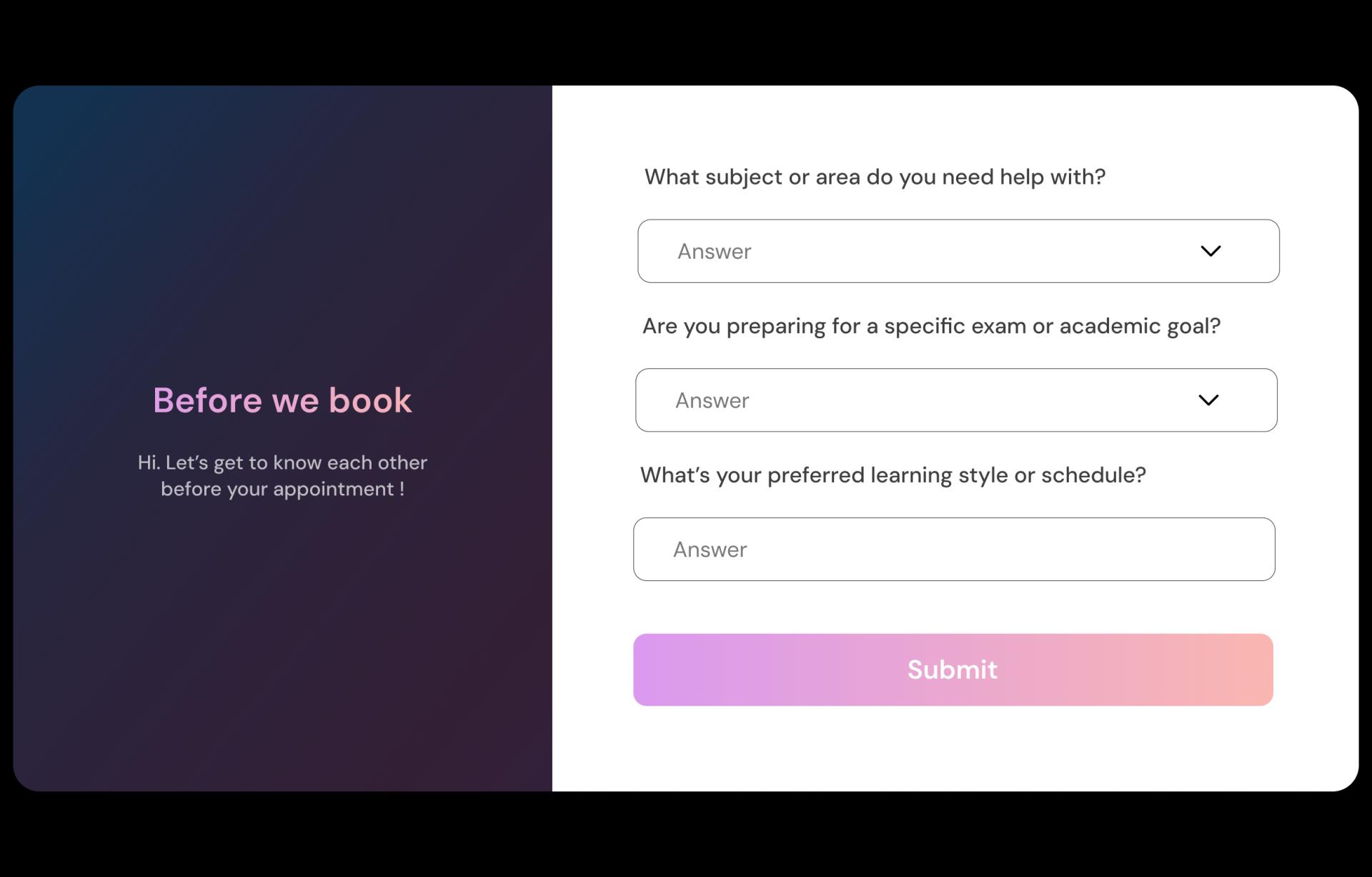
Collect goals, level, syllabus, and constraints before session
Ask the questions you’d normally ask in the first 10 minutes. Subject, grade, board (CBSE/ICSE/IB/AP/GCSE), current level, target exam/date, pain points, and what they’ve tried already. Also collect practical stuff like preferred teaching language, topics to avoid, and whether a parent wants updates. You walk into session one prepared, not guessing.
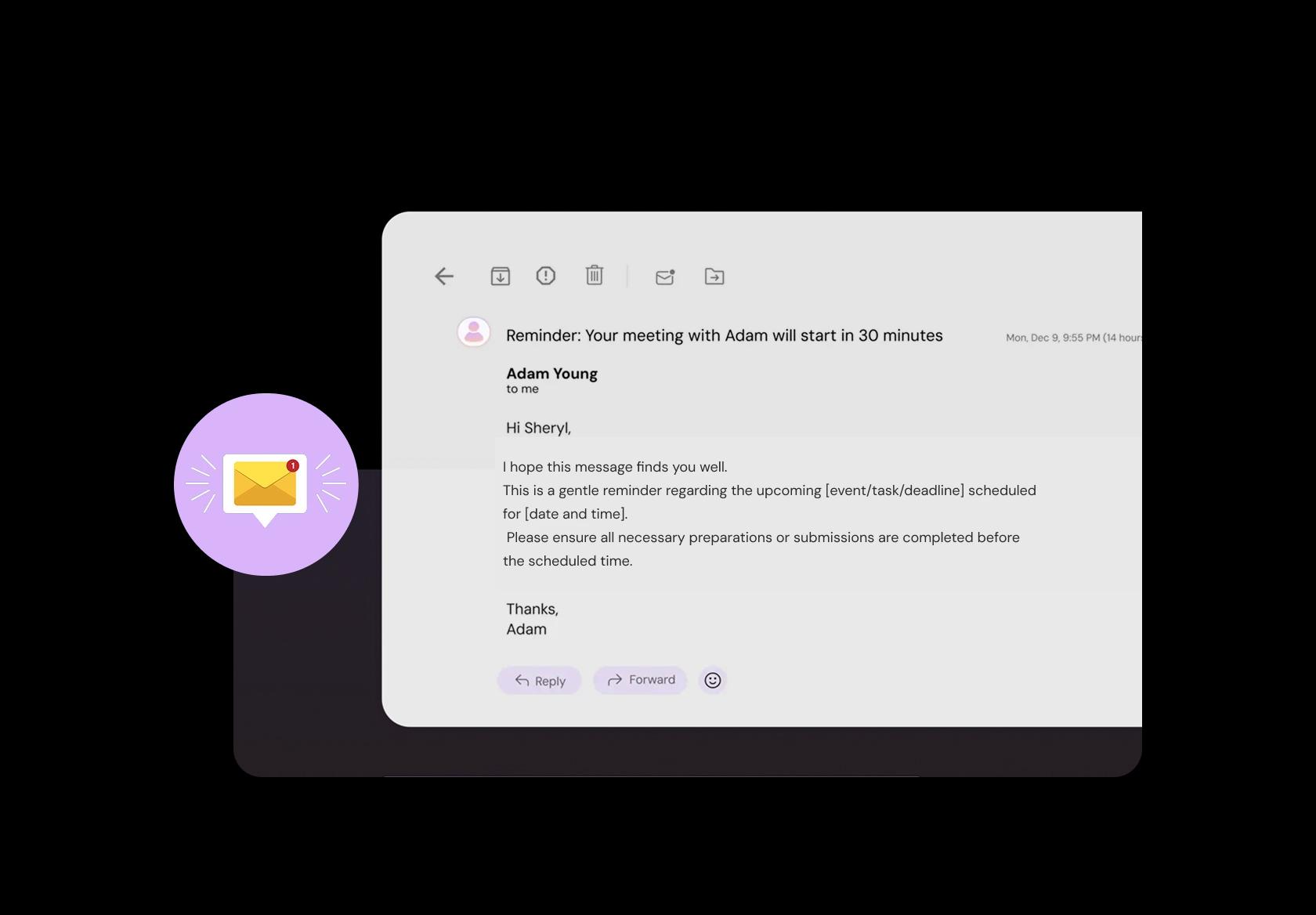
Reduce missed sessions and follow up without awkward chasing
Students miss sessions for boring reasons: they forgot, they’re commuting, their calendar is a mess. Automated reminders 24 hours and 1 hour before cut no-shows without you nagging. After the session, send a quick follow-up: homework, next steps, and a simple “reply if anything felt confusing” prompt that catches issues early.
Take upfront payment or deposits to lock the slot
Parents take tutoring more seriously when money is committed. Take full payment or a deposit for high-demand slots, and clearly state your reschedule policy so it’s fair. This prevents last-minute “sorry something came up” cancellations that destroy your schedule, especially during exam season.

Run online + in-person sessions without scheduling chaos
Many tutors do a mix: Zoom on weekdays, home visits on weekends, or sessions at a learning centre. Set separate locations with different buffers and rules (travel time, setup time, maximum sessions per day). Your calendar stays realistic and you don’t accidentally book two “far apart” sessions back-to-back.
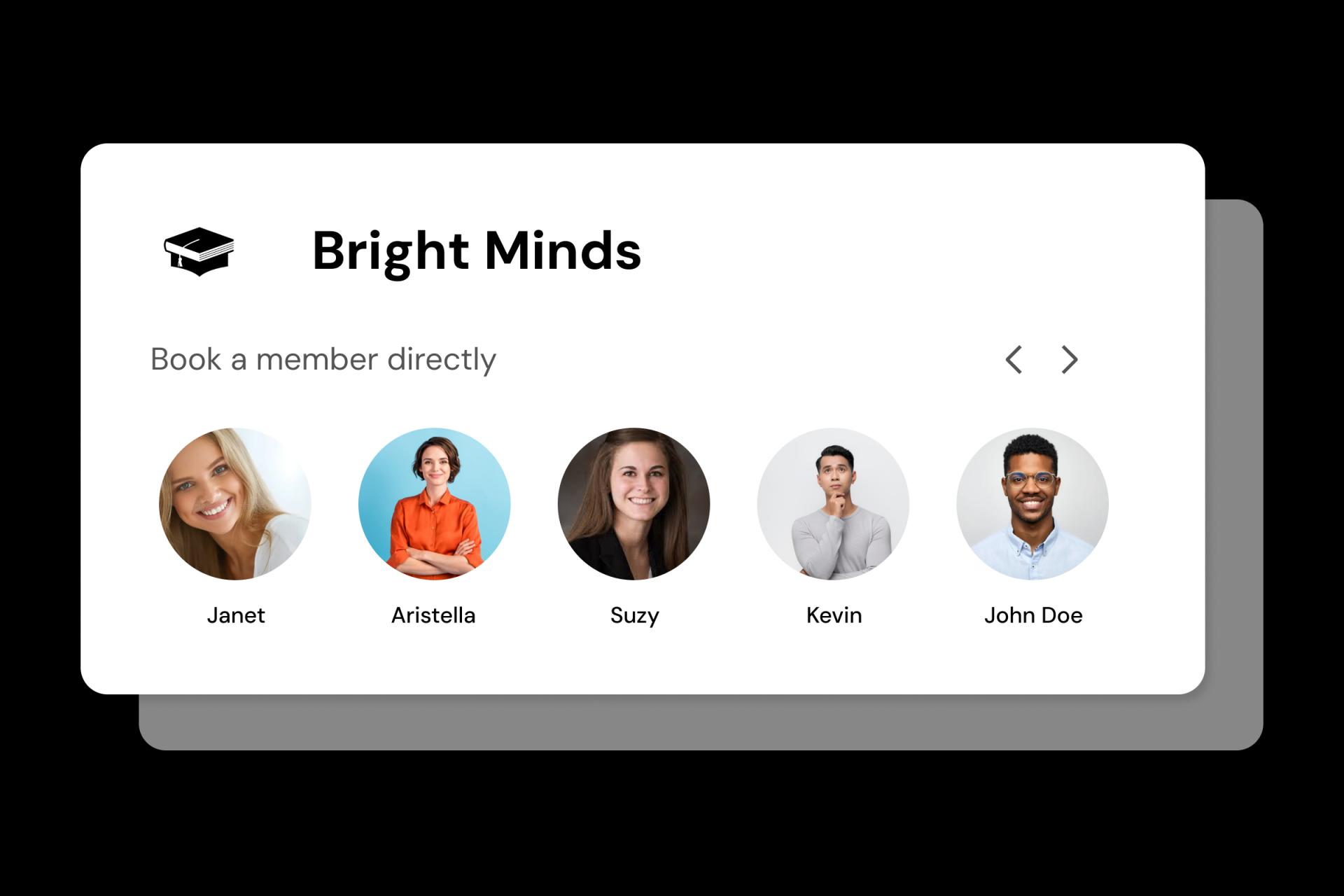
Offer different session types with different rules and prep
Not every session is “1 hour tutoring”. You might offer a 30-min doubt-clearing, a 60-min weekly class, a 90-min exam strategy session, or a 2-hour crash review. Each needs different durations, buffers, and pricing. When services are separate, students book the right thing and you stop fixing wrong bookings manually.
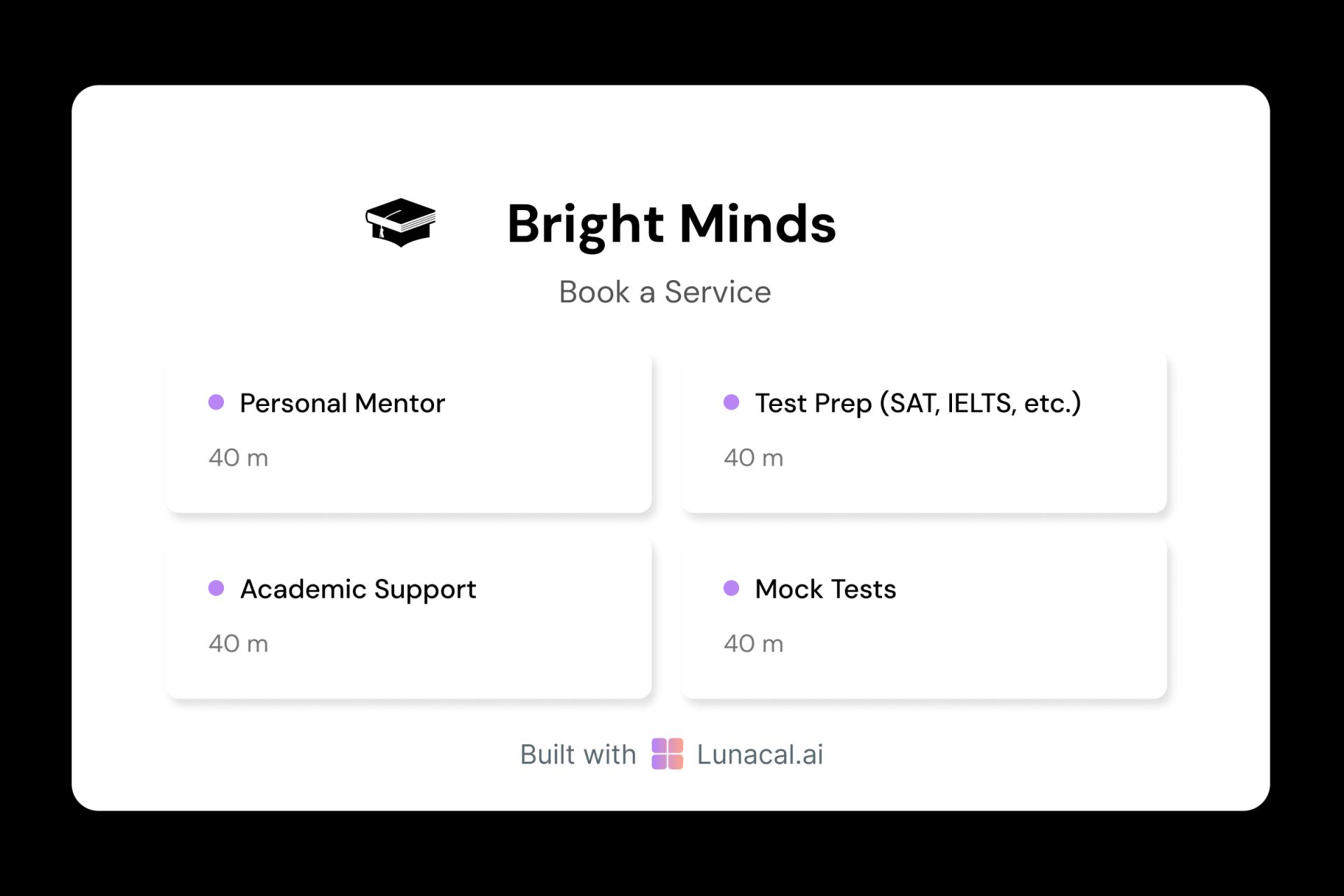
Assign new students fairly across your tutor team
If you run a small tutoring centre, round-robin keeps distribution fair and fast. New enquiries go to the next available tutor, while still letting you route by subject (Math vs English), level (grade 6 vs grade 12), or format (online vs in-person). Students get quicker confirmations and your team stays balanced.
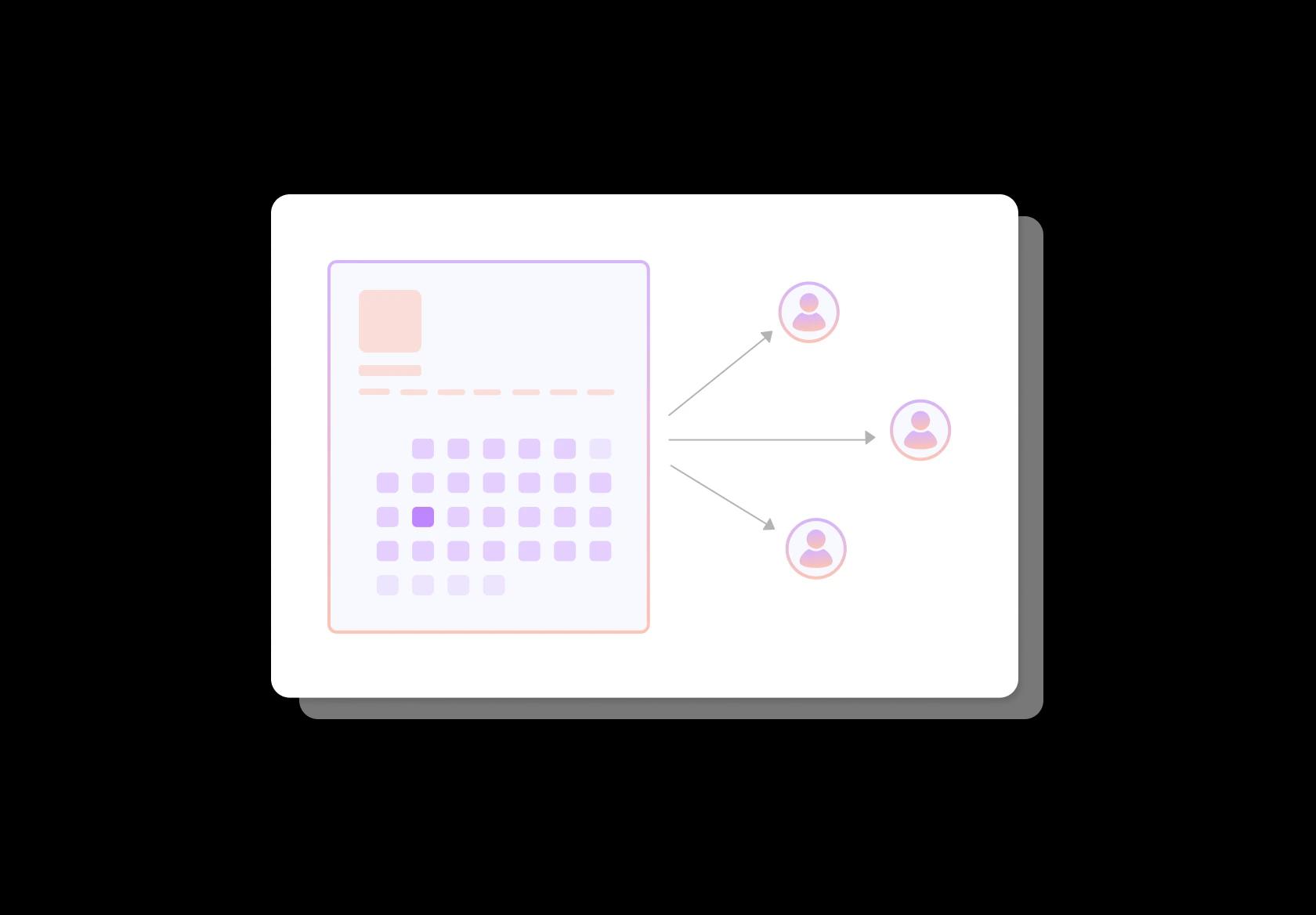
Let students pick the right tutor, not just “any tutor”
Parents want to know who’s teaching their kid. Show each tutor’s subjects, levels, teaching style, experience, and typical outcomes. Add practical details like accent/language comfort, timezone, and availability. It reduces pre-call anxiety and improves match quality, which usually means higher retention.
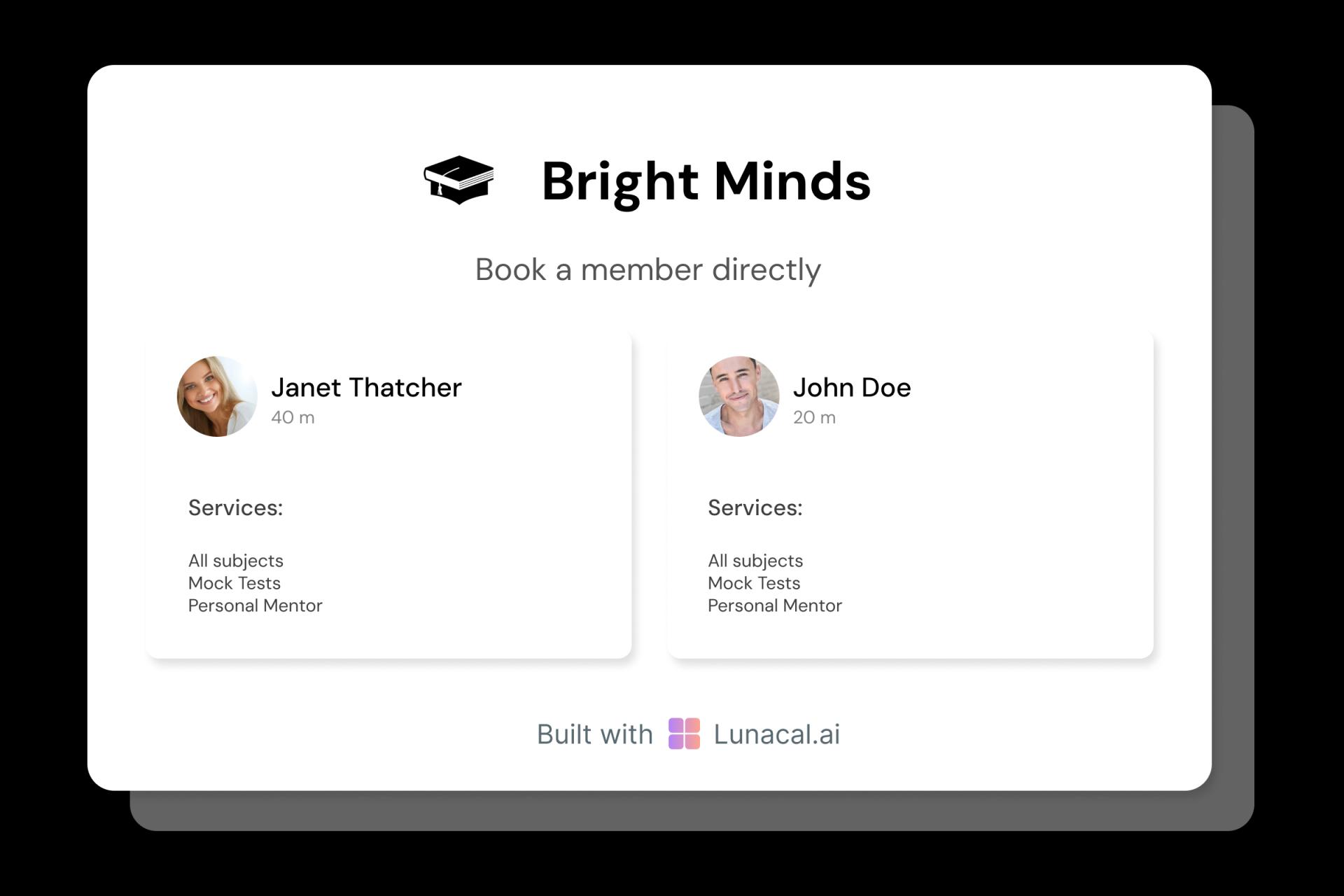
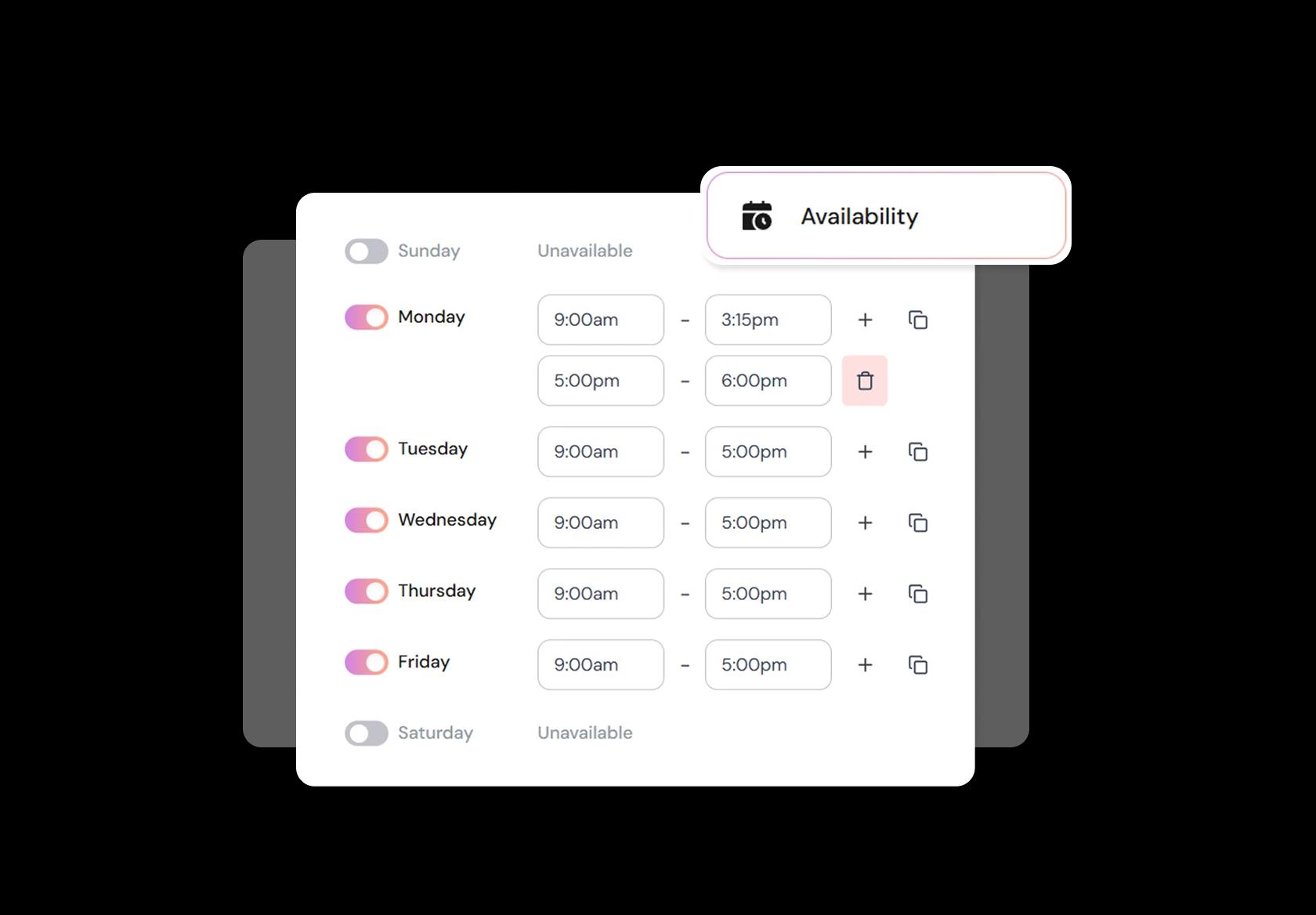
Adjust slots for exam season, holidays, and real life
Tutoring calendars change constantly: school holidays, exam months, coaching batches, and personal commitments. You should be able to add breaks, minimum notice, cutoff times, and temporary overrides. This keeps your availability accurate and stops the stressful situation where a student books a slot you can’t realistically take.
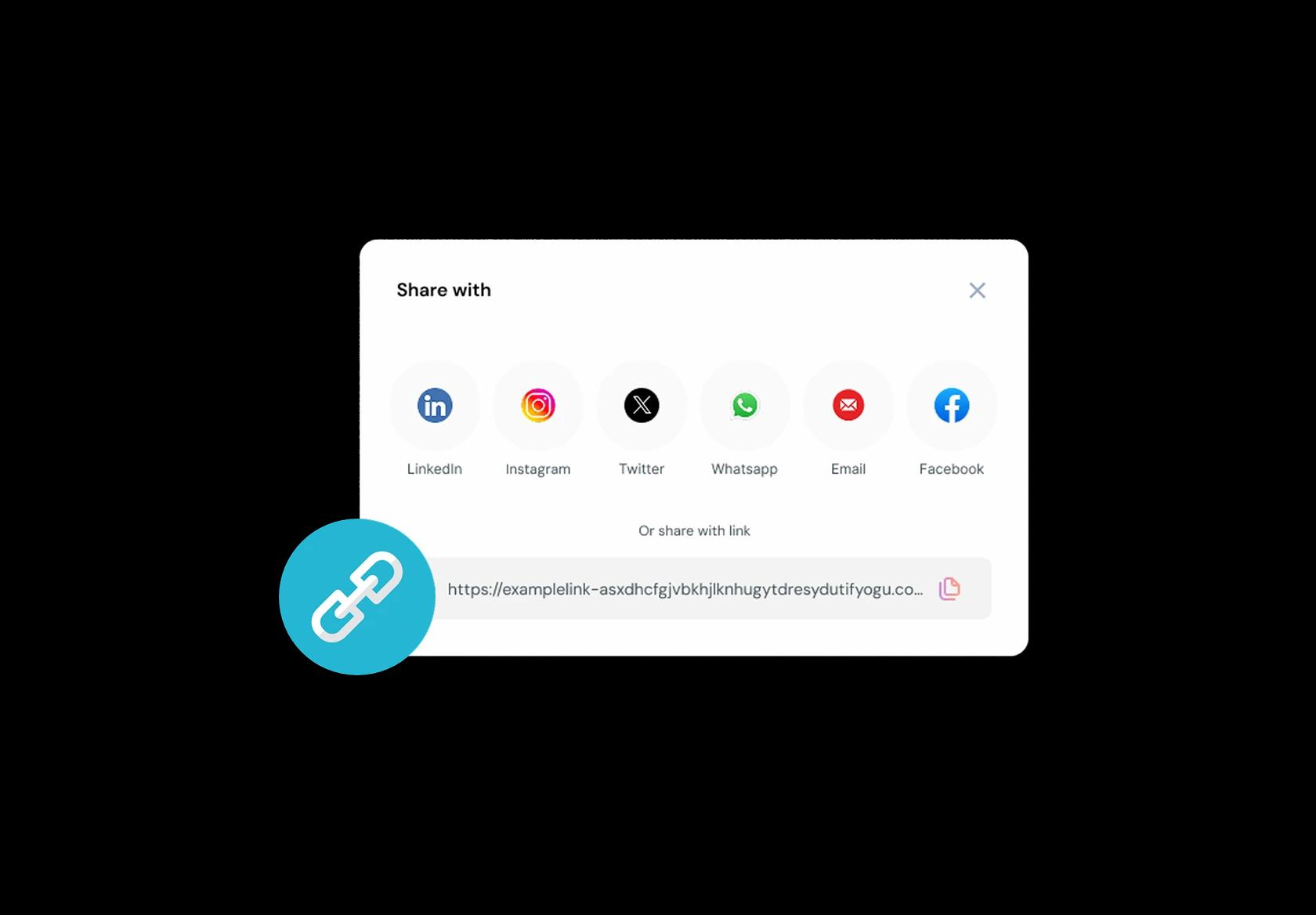
One tutoring booking link for website, email, and socials
Students discover tutors in scattered places: WhatsApp, email, Instagram, Google Business Profile, school groups, and your website. A single booking link that works everywhere removes friction. The key is consistency: same services, same policies, same availability, so no one gets confused and drops off.
No commission, No license fees.
Just simple, fair pricing
(save upto 20%)
Standard
- Unlimited Calendars & Services
- Connect Online Meeting Tool
- Payments via Stripe, PayPal
- Text / Email Reminders
- Customize your booking page
Teams
- All Standard Features
- Teams Scheduling
- Multi-session Packages
- Round-robin Scheduling
- Webhooks
Enterprise
- AI Voice Agent
- Account Manager
- Complete Branding
- MCP Server (Beta)
- SSO


Tutor Appointment Booking Playbook
1) Start with a session menu that students can’t mess up
A good tutor booking system removes ambiguity. Your menu should help a parent or student pick the right session in 10 seconds, without emailing you first.
- Separate by purpose: Trial Lesson, Homework Help, Exam Prep, Doubt Clearing, Project Help
- Offer 2–3 clear durations: 30, 60, 90 minutes (don’t overload choices)
- If you teach multiple subjects, add a “Subject” selection field during booking
2) Set availability like a tutor, not like a call center
Tutor scheduling software should protect your teaching energy and prevent back-to-back fatigue. Build rules that keep your day teachable.
- Add buffers between sessions (5–15 minutes) for notes and setup
- Use a minimum notice period (e.g., 6–24 hours) to reduce last-minute chaos
- Cap daily sessions so you don’t burn out during peak exam weeks
3) Collect the 5 details that make the first session actually productive
This is the difference between “hi, what do you need help with?” and starting strong from minute one.
- Student level: grade, board/curriculum, or test (IGCSE, IB, SAT, JEE, etc.)
- Goal: syllabus coverage, weak topics, revision plan, score target
- Current pain: “what are you stuck on right now?” (free-text)
- Timezone + preferred language (critical for global tutoring)
- If under 18: parent/guardian contact for confirmations and policy clarity
4) Make policies visible before the booking is confirmed
Most tutoring disputes happen around reschedules, late arrivals, and payments. Put rules on the booking page so expectations are shared.
- Late arrivals: what time you’ll wait, and whether the session shortens
- Reschedule window: e.g., “free changes up to 12/24 hours before”
- No-show rule: fee, forfeited session, or deposit policy
- Packages: define expiry and how missed sessions are handled
5) Reduce no-shows with a simple reminder system
A tutoring appointment booking flow should remind students like a coach, not spam them like marketing.
- Instant confirmation with date, time, timezone, and session type
- One reminder the day before, one 1–3 hours before
- Include the join link, materials link, and a one-tap reschedule option
6) Standardize your online session logistics
If you tutor online, consistency builds trust. Your tutor scheduling software should make joining and preparation frictionless.
- Add Zoom/Google Meet/Teams links automatically, plus a backup contact method
- Ask permission if you ever record sessions (especially minors)
- Send a short “what to bring” checklist: notebook, calculator, last test paper
7) Turn one booking into a predictable weekly schedule
The best tutor booking system makes retention boring (in a good way). Build repeatable routines.
- Offer recurring weekly slots for the same student
- Send a quick post-session note: progress, homework, next topic
- Make rebooking one click: same subject, same duration, same tutor
Authored & Reviewed by:
Pranshu Kacholia is the founder of Lunacal.ai, a calendar scheduling and appointment booking system. He works directly with businesses of all sizes to improve booking outcomes - reducing no-shows, cutting back-and-forth, and making scheduling more reliable and efficient. His day-to-day includes reviewing real scheduling setups and edge cases: complex availability and buffers, time zones, routing, cancellation/rescheduling rules, paid meetings and deposits, reminder workflows, and integrations with calendars and meeting tools. He regularly shares appointment scheduling best practices through interviews and community conversations (see this interview and this discussion) and also writes about calendar scheduling (read the article on Medium). He has first-hand experience of using 40+ scheduling tools such as calendly, acuity scheduling, vagaro, fresha, tidycal, square, setmore etc. and understands product nuances deeply.
Lunacal.aiCalendlyAcuity SchedulingSquare AppointmentsSetmoreDoodleBooksyMindbodyFreshaSimplyBook.meHoneyBook


