Financial Advisor Appointment Setting Software
Compliance-aware booking with secure intake, meeting-type routing, disclosure/consent fields, document upload, reminders, & follow-up links.

Booking features for reviews, onboarding, and renewals
Clients book the right consultation without email ping-pong
Let people book the exact session they need: portfolio review, retirement plan check, debt strategy, insurance audit, or a quick “second opinion.” Show only the slots that match your rules. The client picks a time, shares context, and gets a confirmation instantly.
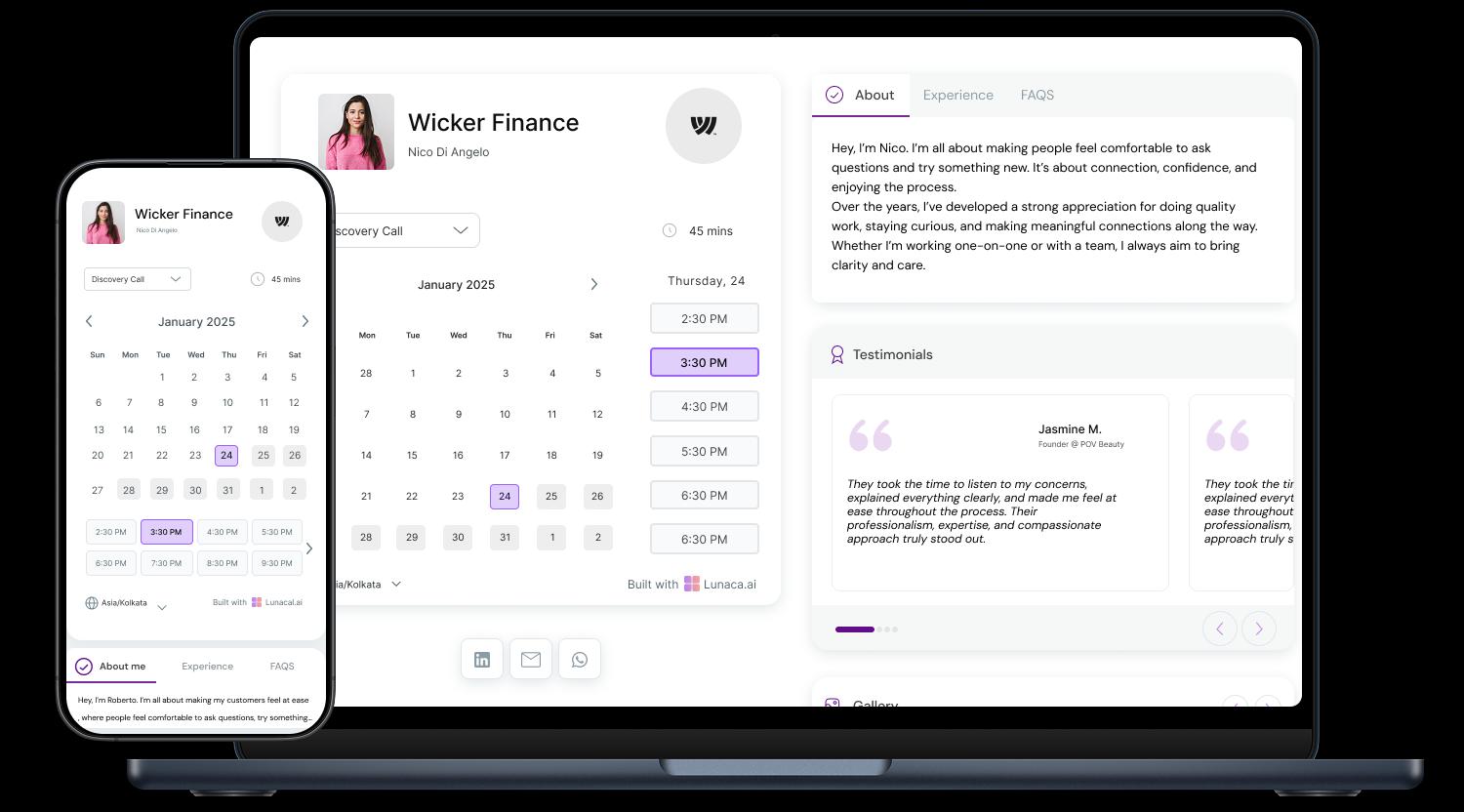
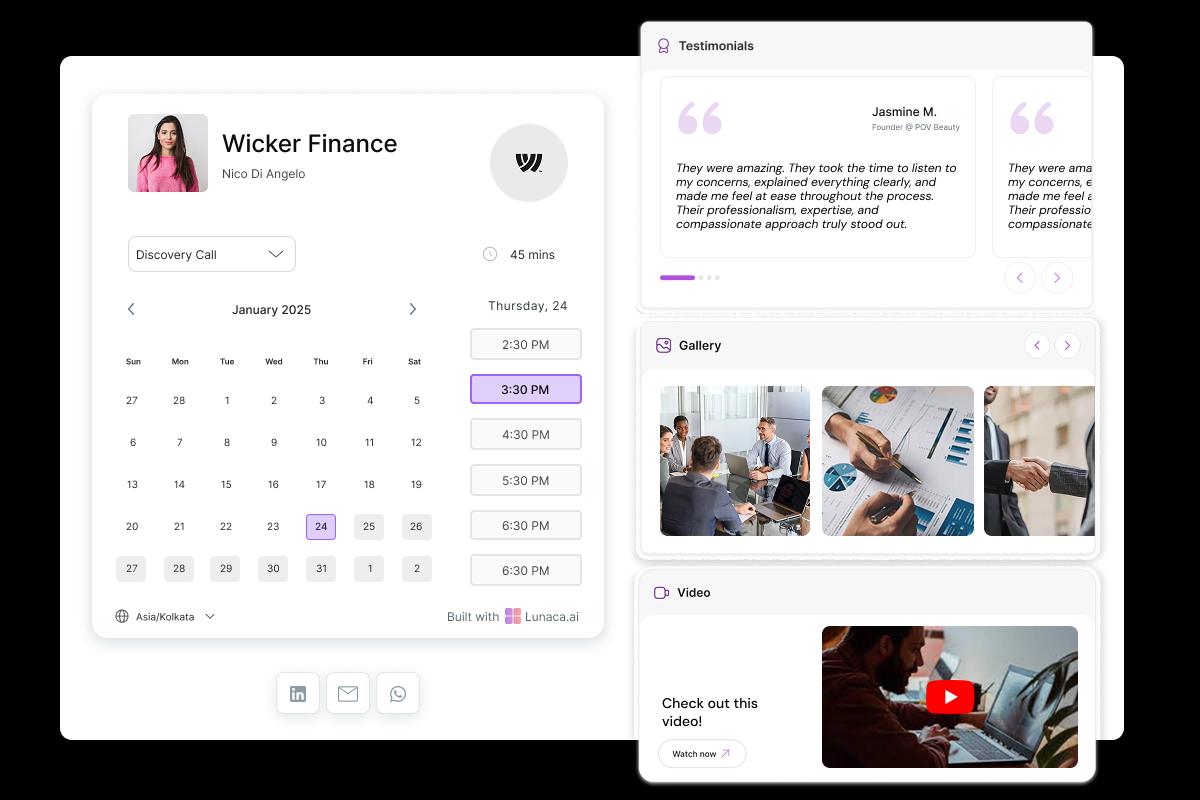
Explain what you do and who it’s for, in plain English
Most prospects don’t know what “wealth management” includes. Use the booking page to spell it out: services, typical outcomes, who you usually help (NRIs, founders, families, pre-retirees), and what to bring to the first call. Add credibility signals like certifications, press, or client principles.
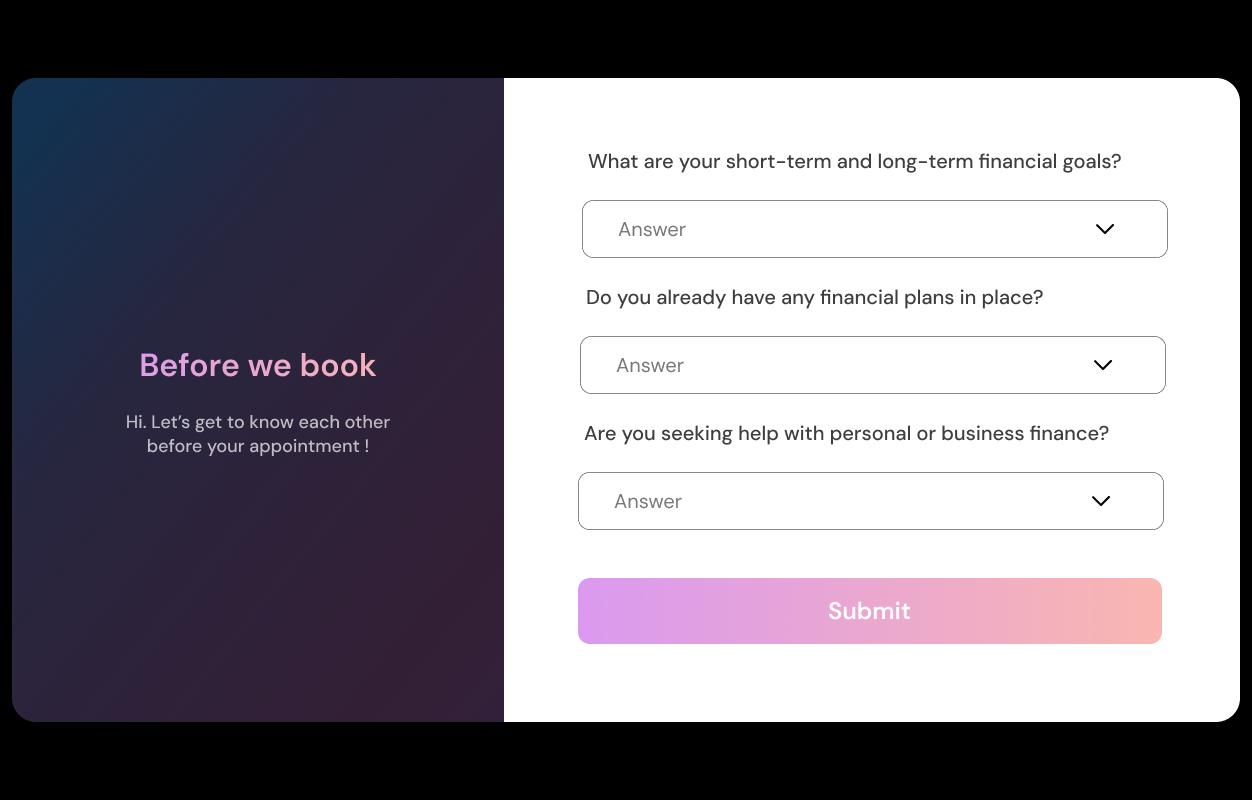
Collect goals, assets, risk comfort, and timelines upfront
Ask a few questions that change the entire call: goal (retirement, house, education), timeframe, risk tolerance, current holdings (rough buckets), and the “why now.” If it’s debt-related, ask lender type and urgency. You start the meeting with context instead of spending 15 minutes doing intake.
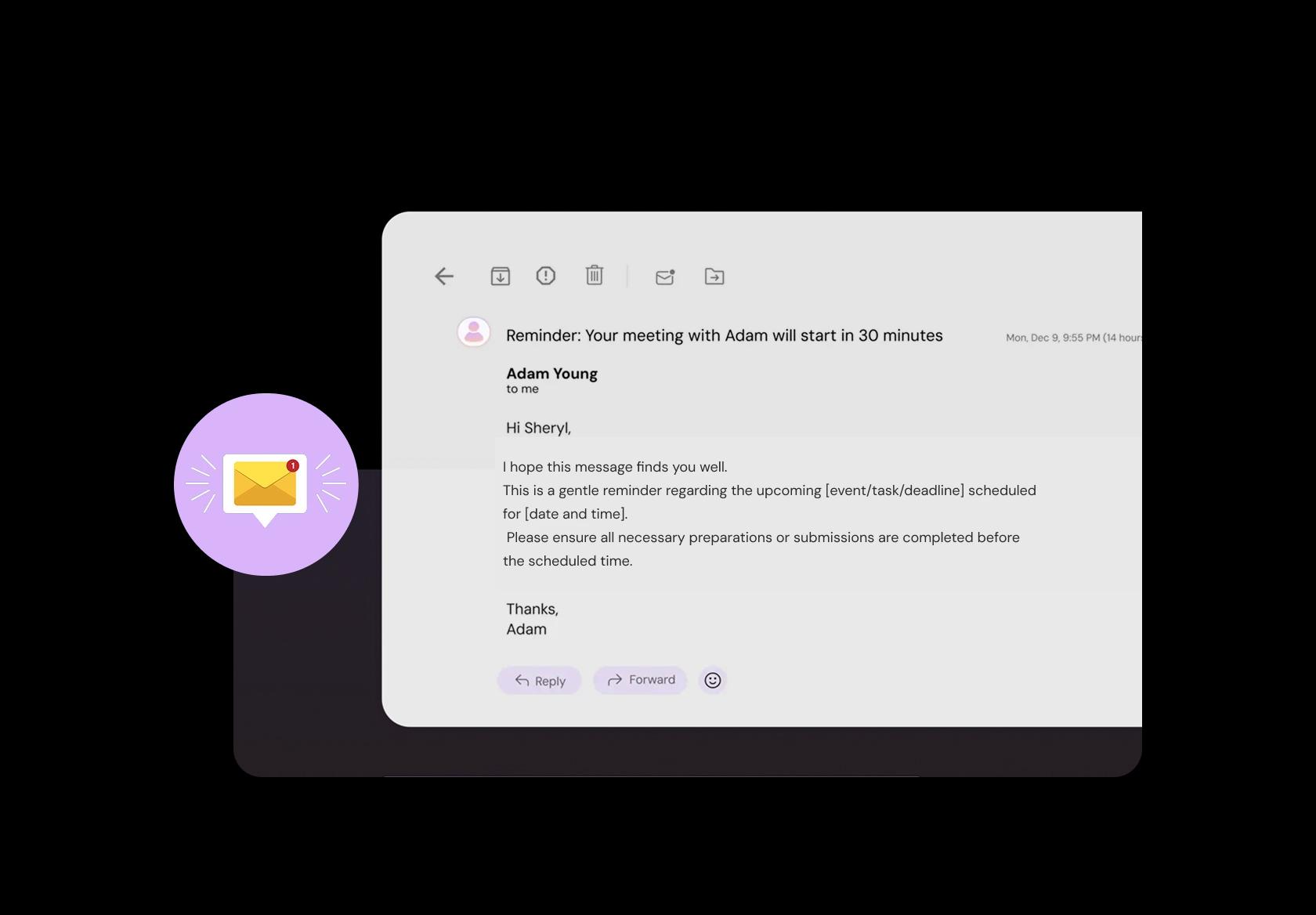
Cut no-shows and make clients arrive prepared
No-shows happen when people feel uncertain or unprepared. Send reminders with the agenda, the meeting link, and a short checklist: latest statements, policy docs, loan details, or questions they want answered. Add a simple reschedule option so your calendar doesn’t get wrecked last minute.
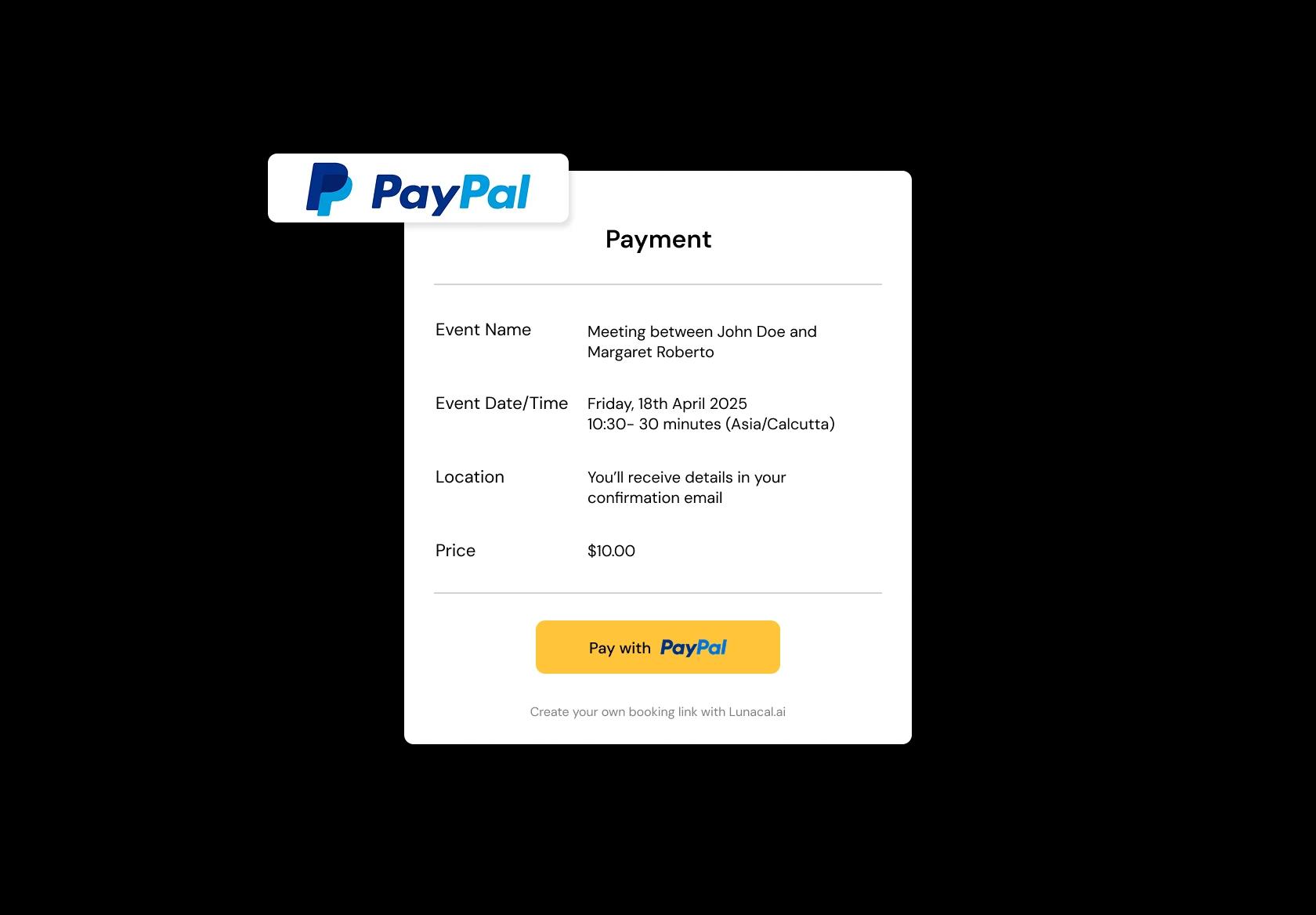
Collect fees, deposits, or retainers before the call
For paid discovery calls or planning fees, take payment during booking so the engagement is clear from day one. If you work on retainers, use a deposit to confirm seriousness. It reduces “soft bookings” and filters out people who just want free advice.
Keep branches, time zones, and advisor calendars aligned
Firms with multiple advisors or cities get scheduling chaos fast. Centralize calendars so a client in Dubai doesn’t accidentally book an India-only slot, and so branch availability stays consistent. It also helps if you split work between office meetings and online consultations.
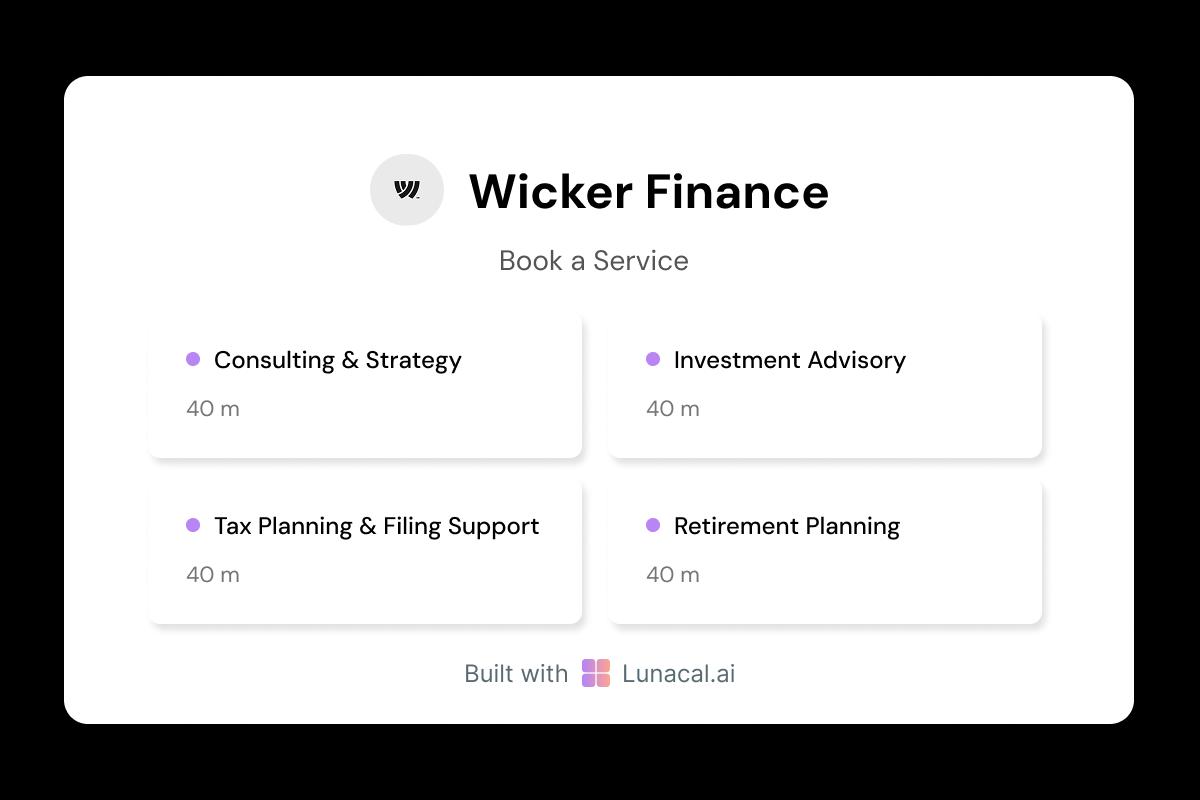
Different session types with correct duration and buffers
A 15-minute “goal check-in” is not a 60-minute portfolio deep dive. Create distinct services with clear durations, prep time, and follow-up time. Add buffers for note-taking and sending action items, so your day doesn’t turn into back-to-back calls with zero breathing room.
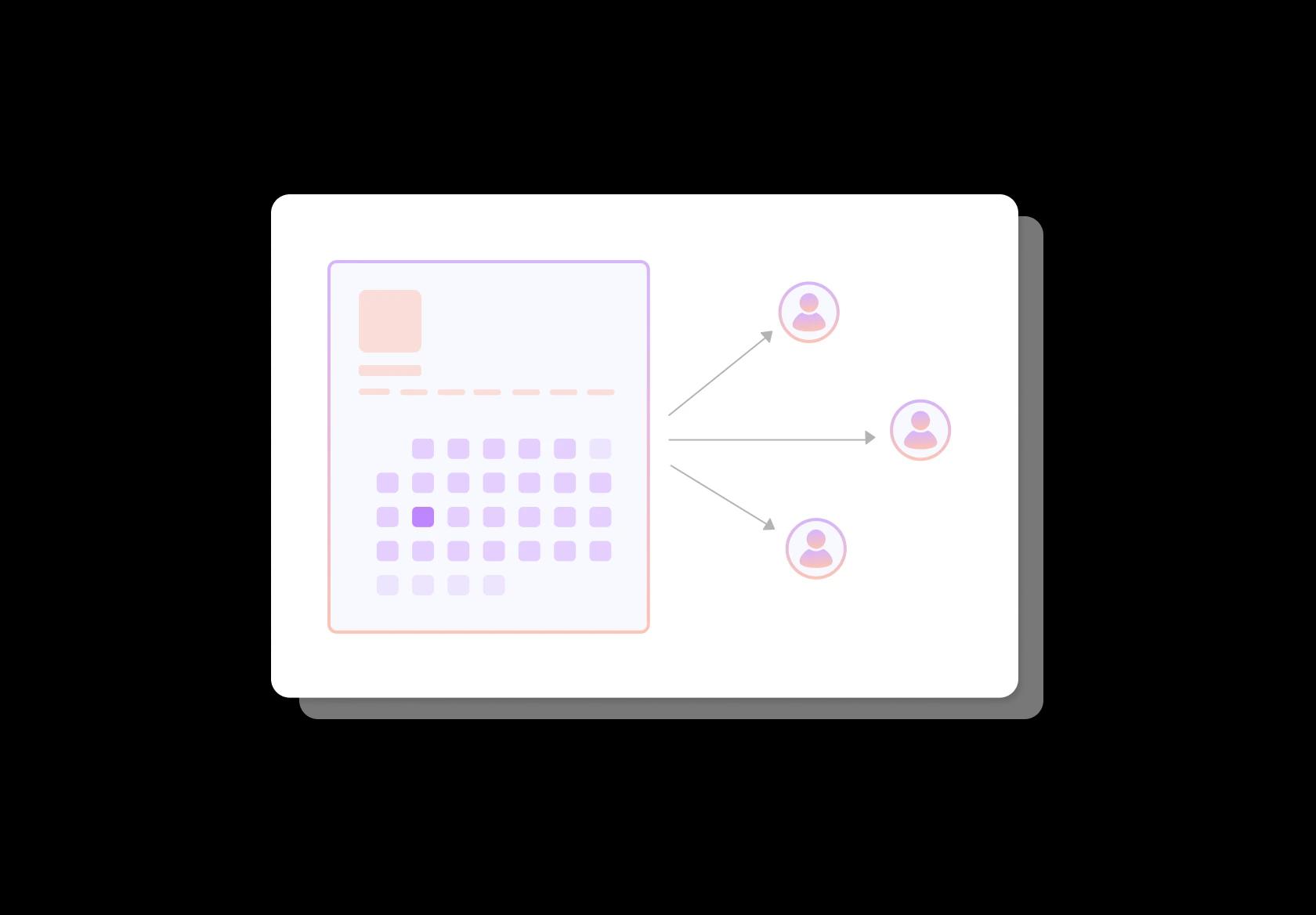
Distribute new leads fairly across advisors
If you have multiple advisors taking new clients, round-robin assignment prevents one person from getting overloaded while others sit idle. Prospects also get faster responses, which matters when they’re comparing advisors and making a quick decision.
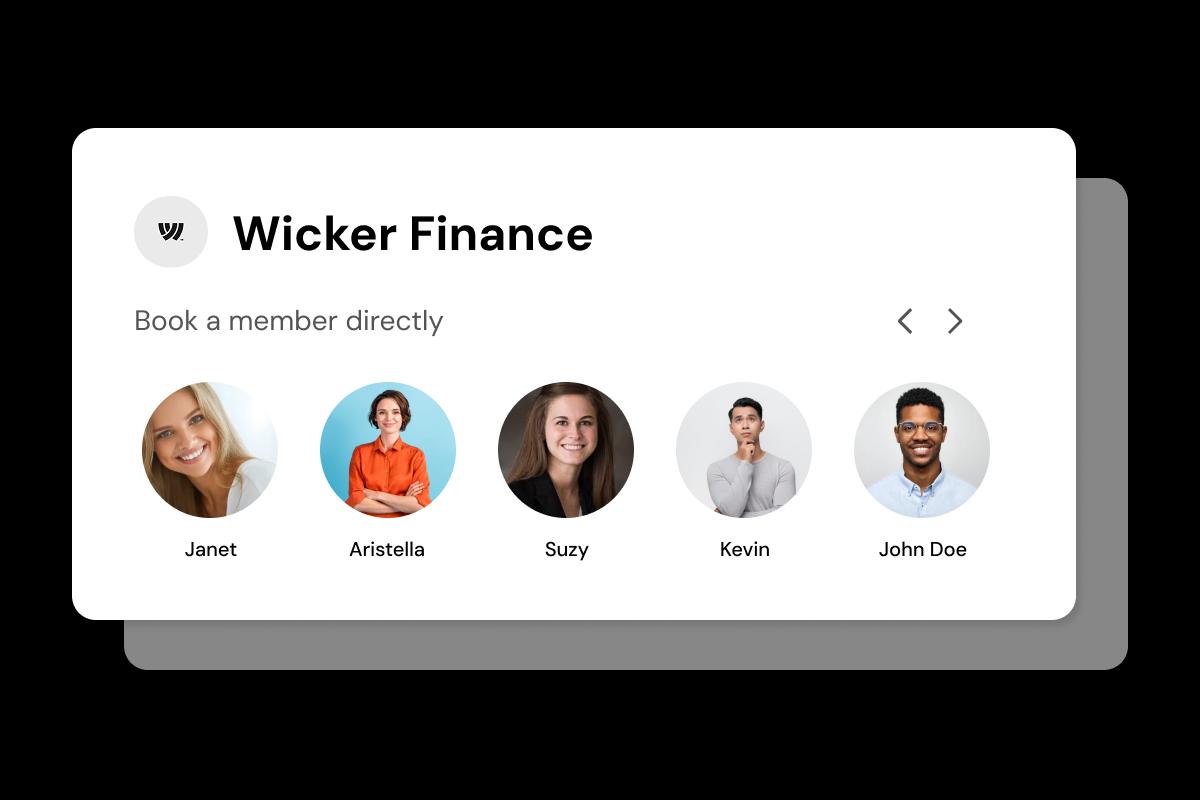
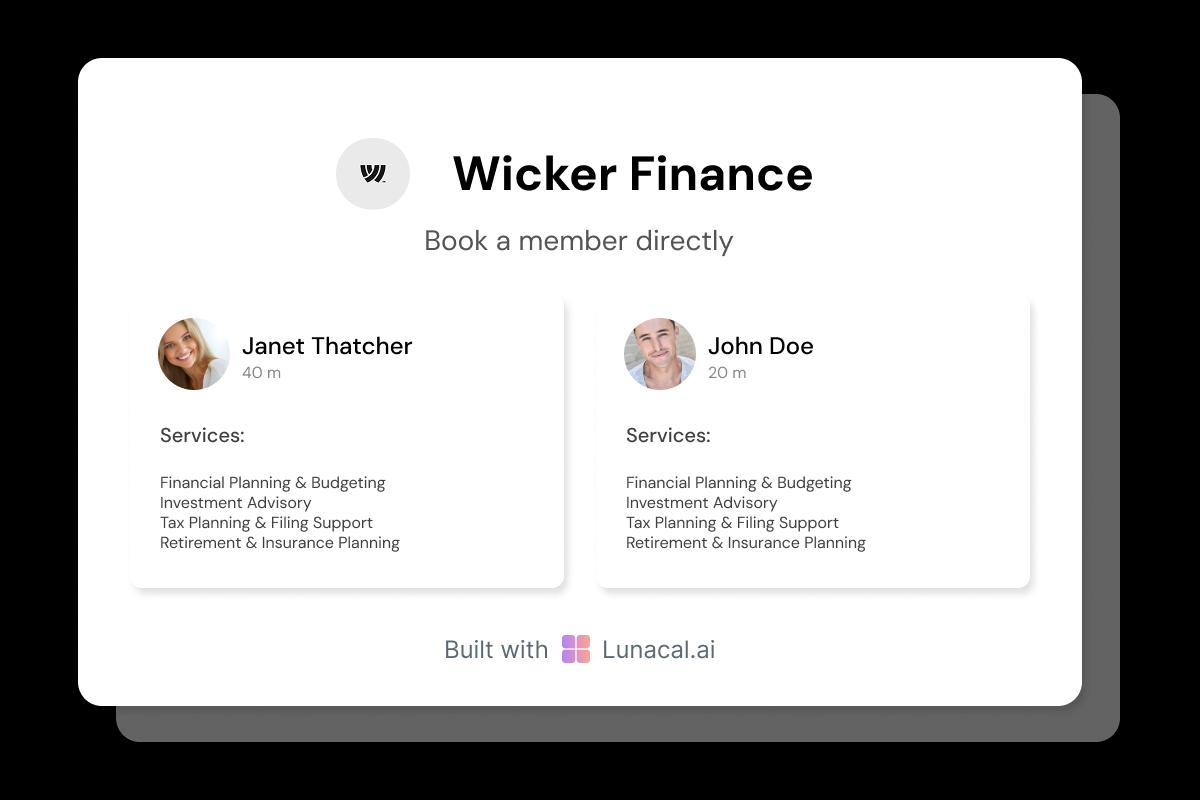
Help clients choose the right advisor for their situation
Profiles reduce mismatches. Let clients pick by specialty: retirement planning, insurance, equity investing, tax coordination, startup liquidity, or NRI planning. Include what they handle best, how they work, languages spoken, and what a first call typically looks like.
Handle tax season, market volatility, and travel weeks
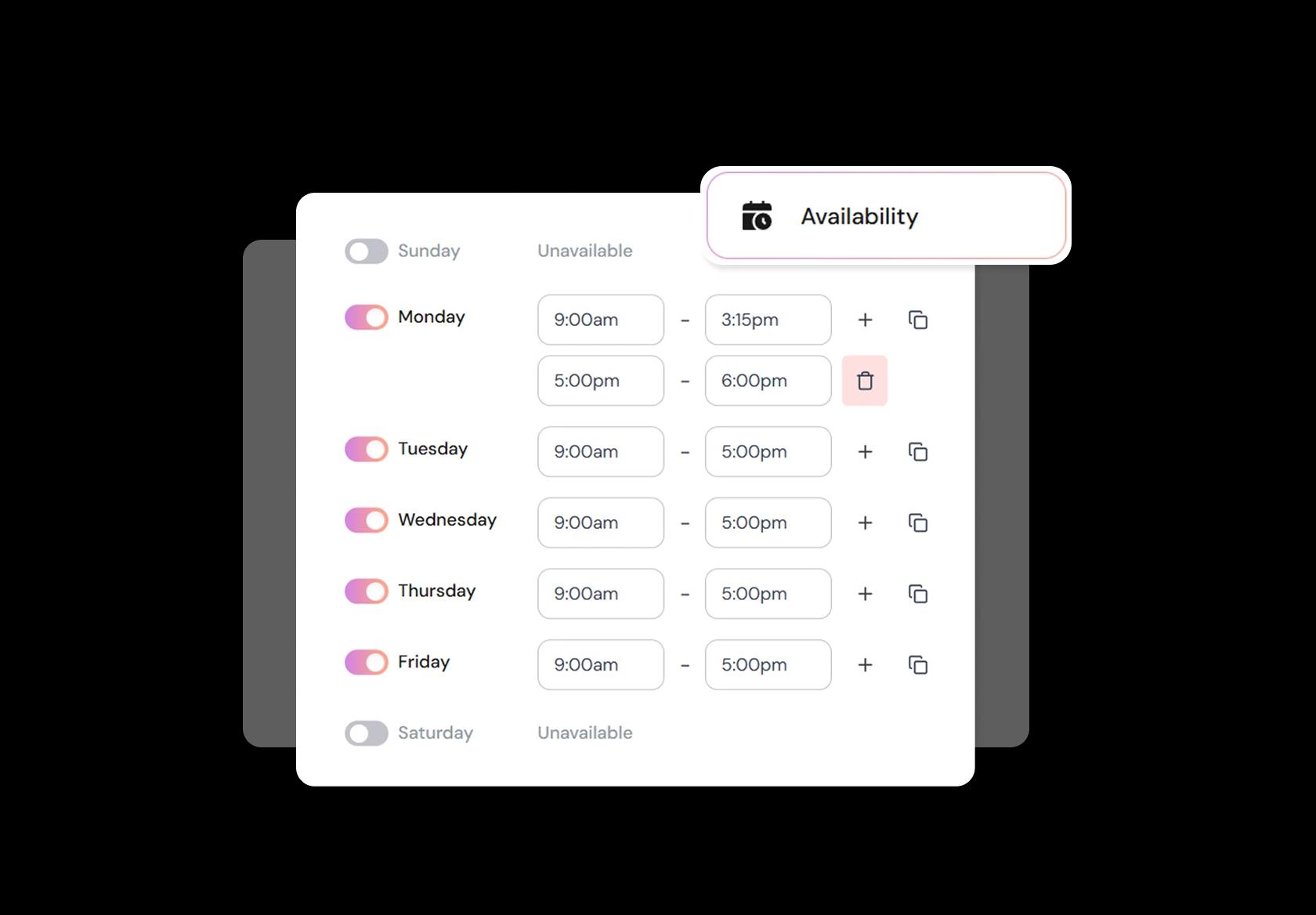
Demand isn’t steady in finance. Tax season, year-end planning, and volatile markets create spikes. Availability controls let you open extra slots, tighten minimum notice, or block travel days without rebuilding your calendar. It keeps your schedule sane when things get hectic.
One booking link for emails, portals, website, and LinkedIn
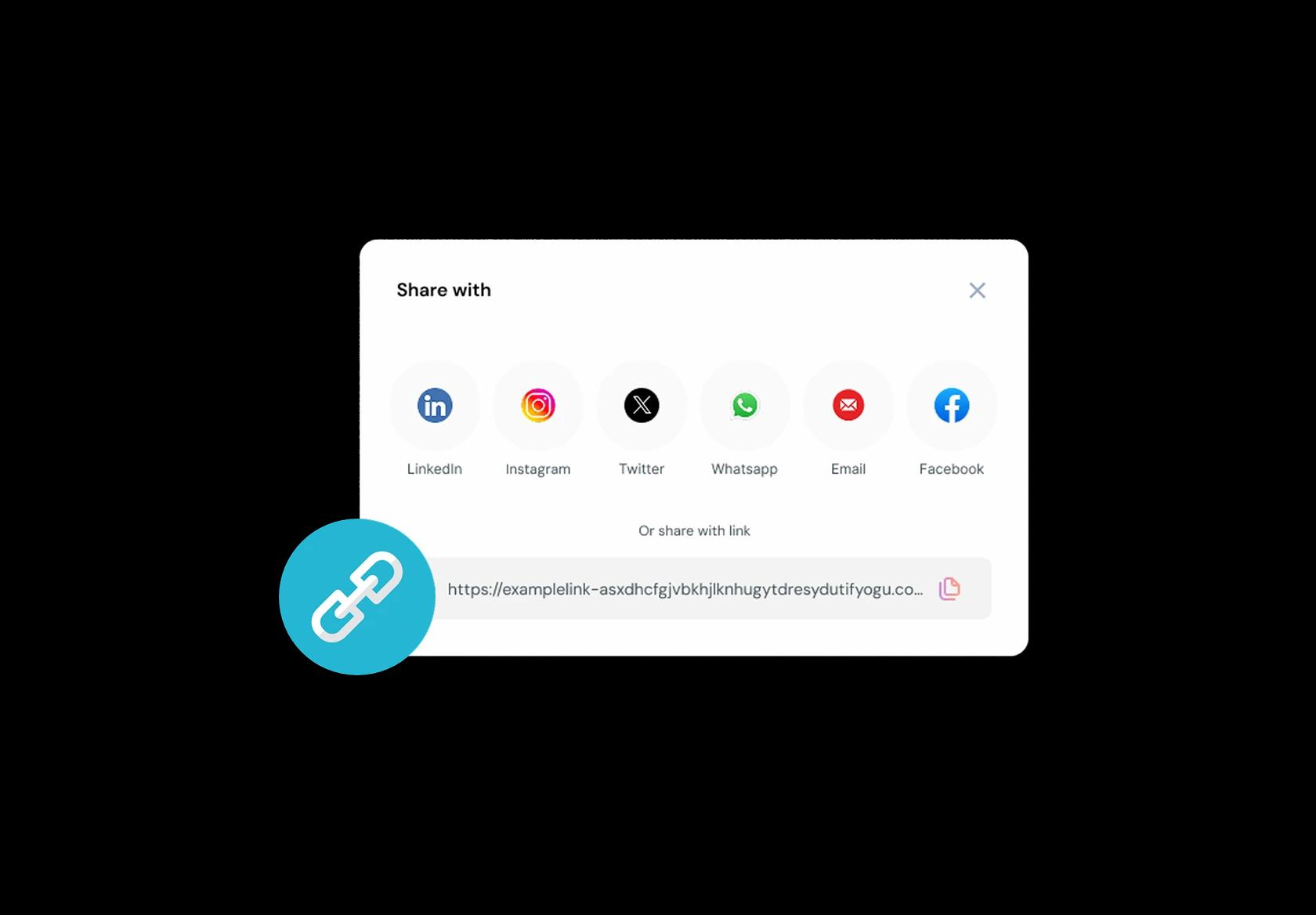
Clients find you through referrals, newsletters, LinkedIn, webinars, or a firm website. A single, consistent booking link removes friction. Put it in your email signature, client portal, lead forms, and follow-up messages so people can act the moment they’re ready.
No commission, No license fees.
Just simple, fair pricing
(save upto 20%)
Standard
- Unlimited Calendars & Services
- Connect Online Meeting Tool
- Payments via Stripe, PayPal
- Text / Email Reminders
- Customize your booking page
Teams
- All Standard Features
- Teams Scheduling
- Multi-session Packages
- Round-robin Scheduling
- Webhooks
Enterprise
- AI Voice Agent
- Account Manager
- Complete Branding
- MCP Server (Beta)
- SSO




Financial Advisor Appointment Setting Playbook
Financial advisor appointment setting software should do one job extremely well: help the right people book the right meeting, with the right prep, without creating compliance risk.
1) Start with meeting types that match how advisors actually work
If your booking page offers one generic “Call”, you’ll attract the wrong intent and waste your calendar. Define meetings by client stage and purpose.
- Discovery Call (Prospect): short, qualification-focused, clear agenda.
- Initial Consultation: deeper fact-finding, suitability context, next steps.
- Portfolio Review (Client): recurring cadence, document-ready.
- Tax Season / Year-End Planning: time-boxed, high urgency, limited slots.
- Quick Admin Check-in: address changes, paperwork, beneficiary updates.
2) Use pre-call intake to qualify without sounding like an interrogation
The best appointment booking for financial advisors collects enough information to route correctly, set expectations, and avoid a “so… tell me about yourself” opening.
- Location and time zone (global audiences book across regions).
- Primary goal: retirement, investing, insurance, debt, tax planning, business finance.
- Approximate investable assets or income range (optional, with “prefer not to say”).
- Timeline: “I’m ready this month” vs “researching for next quarter.”
- Relationship: individual, couple, family office, small business.
- How they heard about you (useful for filtering spam and measuring channels).
3) Build compliance-friendly expectations into the booking flow
This is where many pages get risky. Your scheduling flow should reduce misunderstandings and create a clean consent trail, without drowning people in legal text.
- Clarify the meeting purpose: education and planning, not guaranteed outcomes.
- Add a plain-language note on advice scope: “general discussion” vs “personalized advice after onboarding.”
- Consent to communication: email and SMS confirmations/reminders, with opt-out language.
- Disclosures link placement: visible during booking, not buried after confirmation.
- Country-aware wording if you serve multiple jurisdictions (keep it simple and non-legalistic).
4) Protect focus time with smart calendar rules
Financial advisors lose time to context switching. Your financial advisor scheduling software should enforce rules that keep your day usable.
- Buffers before and after meetings (notes, CRM updates, follow-ups).
- Lead time rules (avoid same-hour bookings unless you want them).
- Capacity limits per meeting type (for example, only 3 discovery calls per day).
- Meeting windows by region (early slots for APAC, later slots for Americas).
- Routing rules: prospects to SDR/assistant first, qualified leads to the advisor.
5) Confirmation and reminders should reduce no-shows and increase preparedness
Reminders are not just “don’t forget.” They’re a gentle pre-frame that makes the meeting productive.
- Instant confirmation with agenda and what to prepare.
- 24-hour reminder with reschedule link (reschedules beat no-shows).
- 2-hour reminder for first-time prospects (where drop-off is common).
- Include document prompts: statements, existing policies, questions list, goals.
- Set a clear “what happens next” after booking (who calls whom, and how).
6) Make the meeting experience feel secure and professional
Trust is the product in financial services. Your appointment setting page should look and behave like it understands that.
- Video/phone details sent cleanly, with one-click join links.
- Advisor bio and credentials summary (short, factual, not salesy).
- Option to book for a couple or add an attendee (spouse, finance manager).
- Accessibility notes: captions, phone alternatives, local dial-in options.
- Spam protection for public booking links (quietly, without harming conversion).
7) Post-meeting follow-up is where “appointment setting” becomes “client momentum”
The best financial advisor appointment setting software doesn’t end at the calendar invite. It helps you close the loop cleanly.
- Automatic follow-up email: recap structure, next steps, and any requested documents.
- Internal notes prompt: “Key goals, risk tolerance hints, concerns, objections.”
- Next-meeting suggestion: book the follow-up while intent is high.
- Audit trail basics: timestamped confirmations, reschedules, cancellations.
- Optional feedback question for first-time prospects (signals quality and improves scripts).
8) The only metrics worth watching at first
If you’re improving one page across markets, you need a small dashboard of truth.
- Show rate by meeting type (discovery vs review vs consultation).
- Reschedule rate and how close to the meeting it happens.
- Qualified-to-booked ratio (are you attracting the right prospects).
- Time-to-next-step (how fast you convert a first call into a second).
Authored & Reviewed by:
Pranshu Kacholia is the founder of Lunacal.ai, a calendar scheduling and appointment booking system. He works directly with businesses of all sizes to improve booking outcomes - reducing no-shows, cutting back-and-forth, and making scheduling more reliable and efficient. His day-to-day includes reviewing real scheduling setups and edge cases: complex availability and buffers, time zones, routing, cancellation/rescheduling rules, paid meetings and deposits, reminder workflows, and integrations with calendars and meeting tools. He regularly shares appointment scheduling best practices through interviews and community conversations (see this interview and this discussion) and also writes about calendar scheduling (read the article on Medium). He has first-hand experience of using 40+ scheduling tools such as calendly, acuity scheduling, vagaro, fresha, tidycal, square, setmore etc. and understands product nuances deeply.
Lunacal.aiCalendlyAcuity SchedulingSquare AppointmentsSetmoreDoodleBooksyMindbodyFreshaSimplyBook.meHoneyBook


