Personal Training Booking Software
PT bookings with trainer selection, paid sessions, packages, intake goals, cancellation rules, reminders, & simple follow-up scheduling.
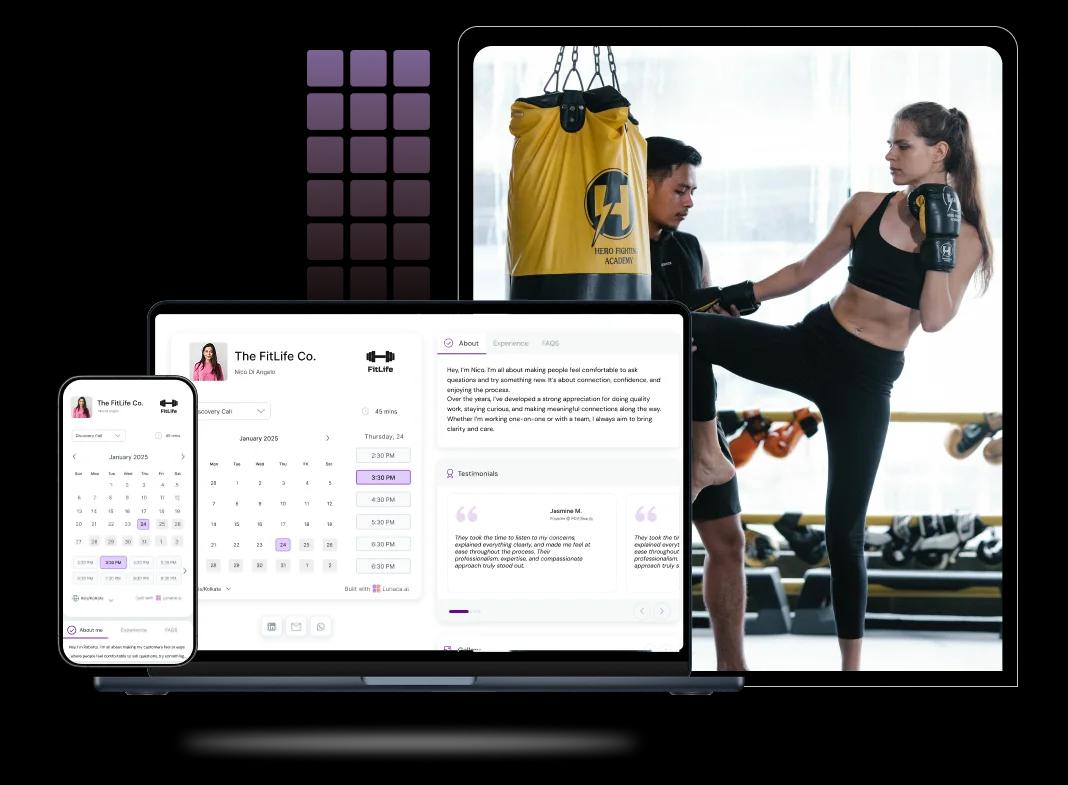
Scheduling features for recurring sessions and packages
Let clients book fast, before motivation disappears
Most clients decide to start when emotion is high and hesitation is low. A solid personal training booking software flow lets them lock a slot in 30 seconds, then sends the confirmation instantly. Add rules like prep time, travel buffers, and “no same-day bookings after X pm” so your calendar stays realistic.
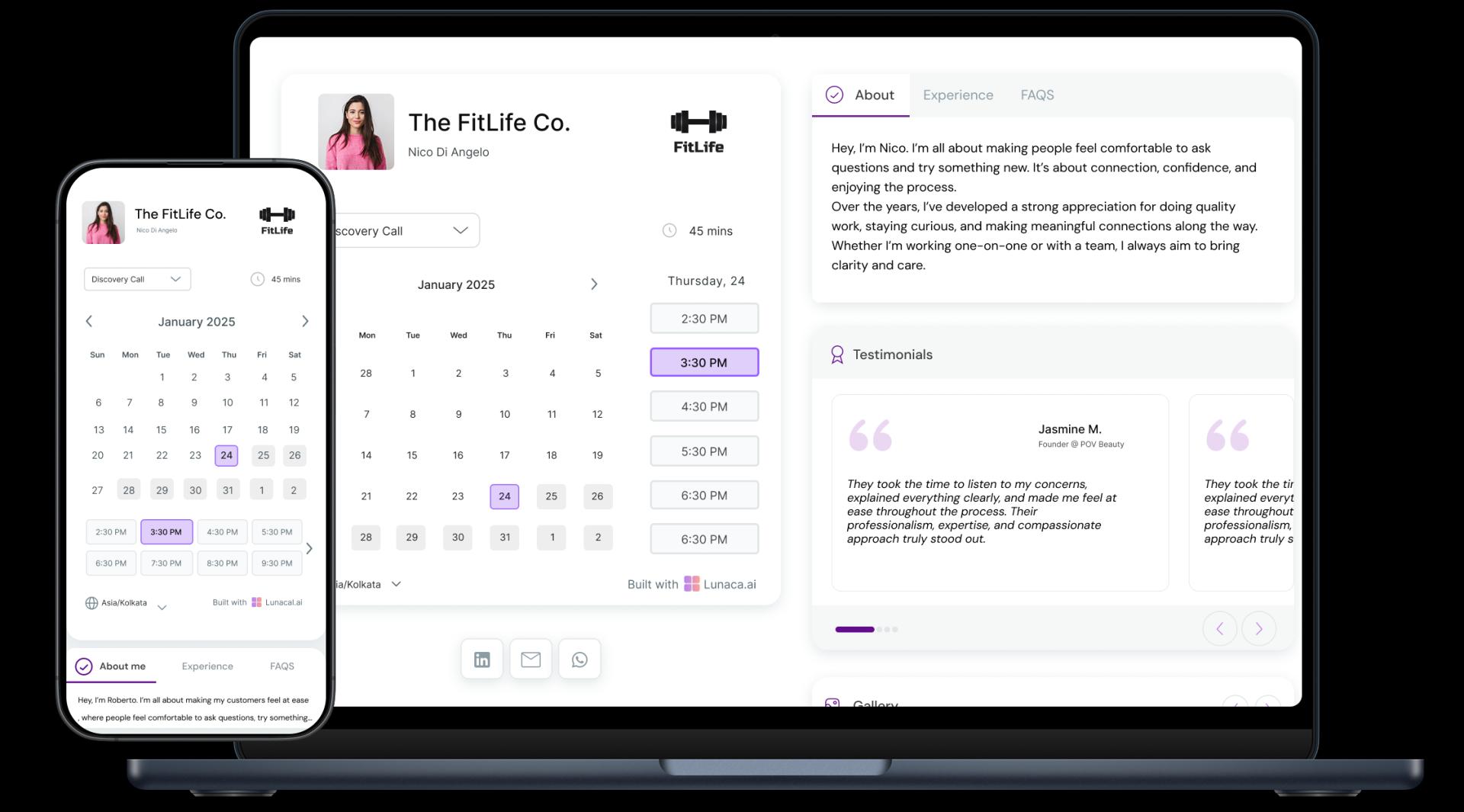
Show your training style and real outcomes before they book
People don’t book “a session”, they book a coach. Put your approach upfront: strength, fat loss, posture, rehab-focused, sport-specific, or beginner-friendly. The best personal trainer scheduling software makes it easy to show proof like transformation photos, testimonials, or quick client wins so the right people self-select before they even pick a time.
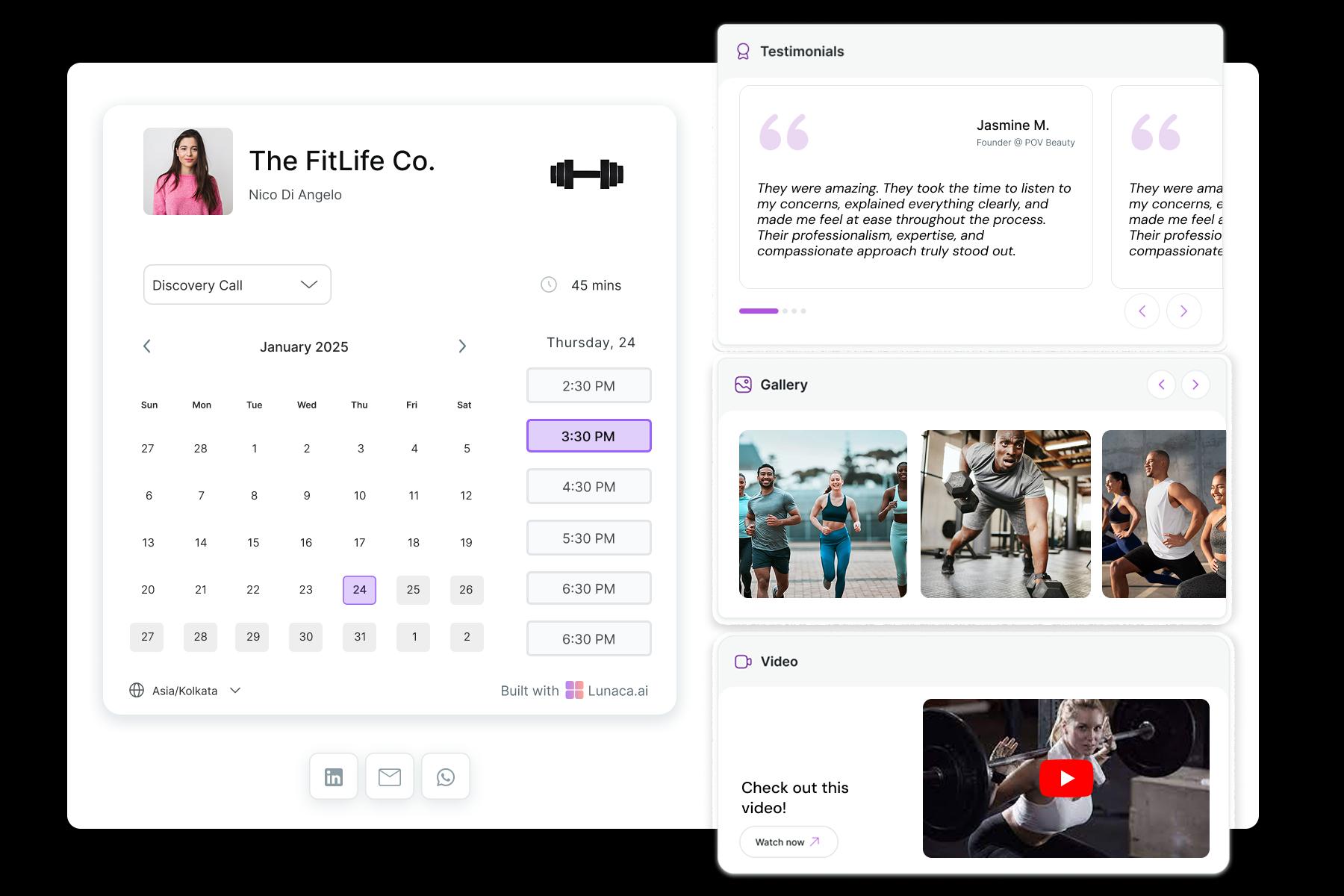
Capture goals, injuries, schedule, and starting point upfront
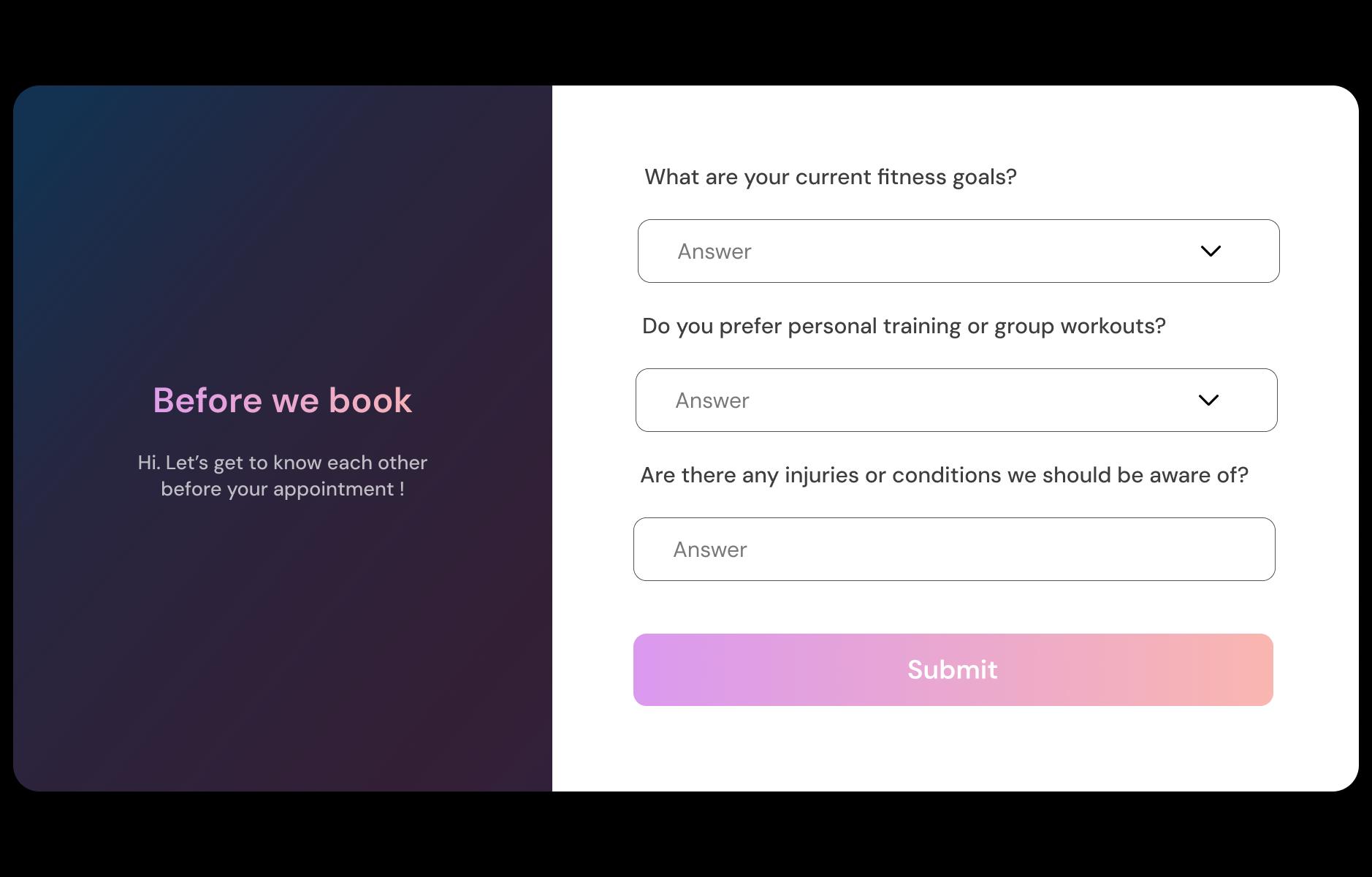
Don’t waste the first 10 minutes of a consult collecting basics. Ask during booking: goal (strength, recomposition, pain-free movement), training history, injuries, equipment access, preferred days, and time constraints. Save the answers with the booking so you can walk in prepared and avoid the “tell me everything again” loop.
Reduce drop-offs with clear, practical prep nudges
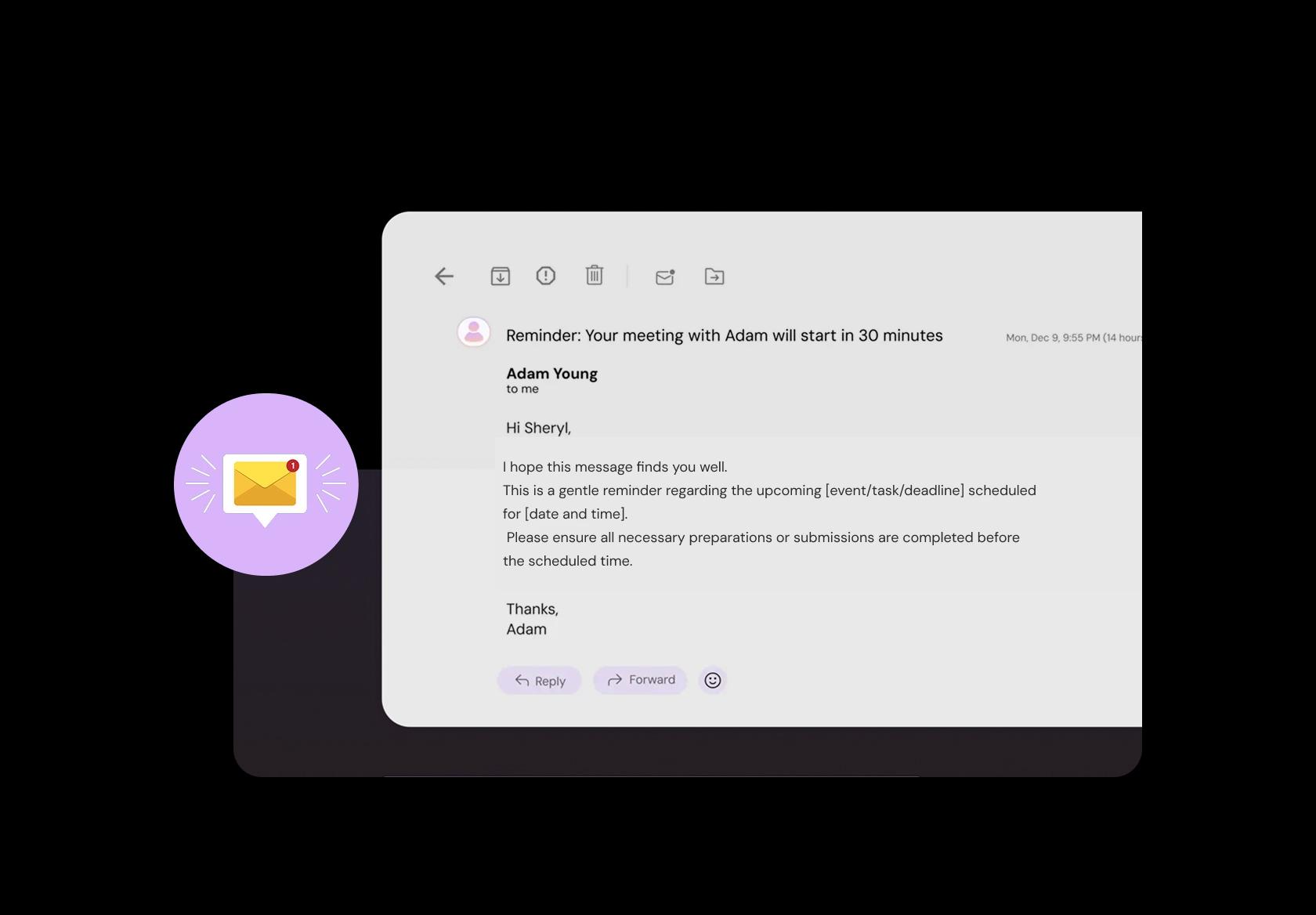
No-shows aren’t always laziness. Often it’s confusion. Send reminders that include location details, what to wear, what to bring, and a simple pre-session tip like hydration or meal timing. A good reminder sequence from your personal training booking software also reinforces accountability: “You’re booked. I’m ready. See you at 6.”
Take payment upfront so sessions don’t feel awkward
Chasing money between sets is a fast way to hate your job. Let clients pay at booking, either full payment or a deposit to lock the slot. It’s especially useful for prime hours, intro offers, and new clients who “might confirm later.” Clean payment flows are a core part of reliable personal trainer scheduling software.

Handle gym, home, outdoor, and online sessions cleanly
Trainers rarely work from one place. Set locations like “Gym”, “Home visit”, “Outdoor”, and “Virtual”, each with its own travel buffers and setup time. Your schedule stays readable, and you don’t accidentally stack a home visit right before a session across town.
Separate session types with different lengths and rules
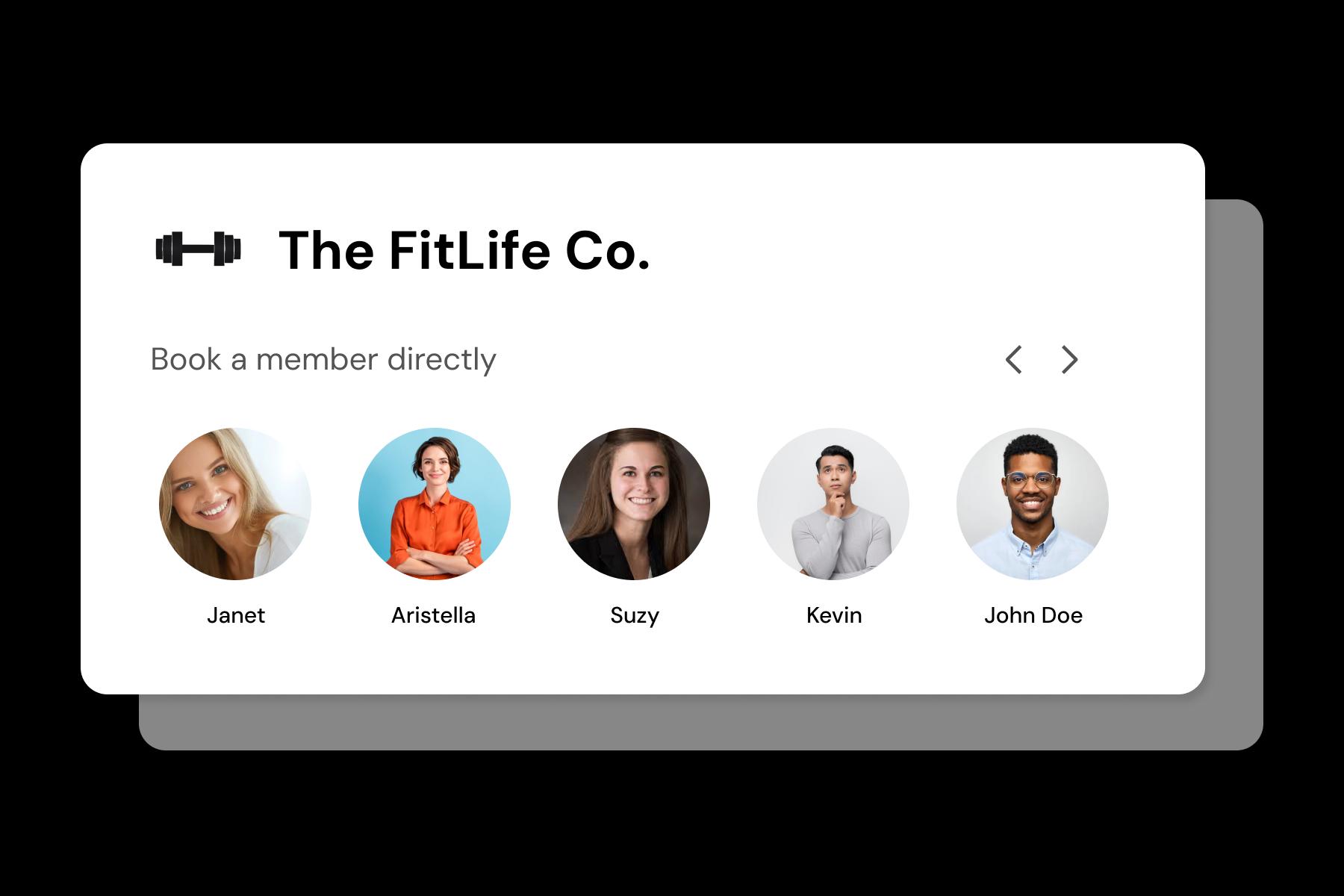
A 30-minute form check is not the same as a 60-minute strength session, and neither matches a mobility screen or nutrition consult. Create distinct services with their own duration, pricing, intake questions, and buffers. That’s how personal training booking software stays flexible without becoming chaotic.
Assign clients fairly across trainers in a team
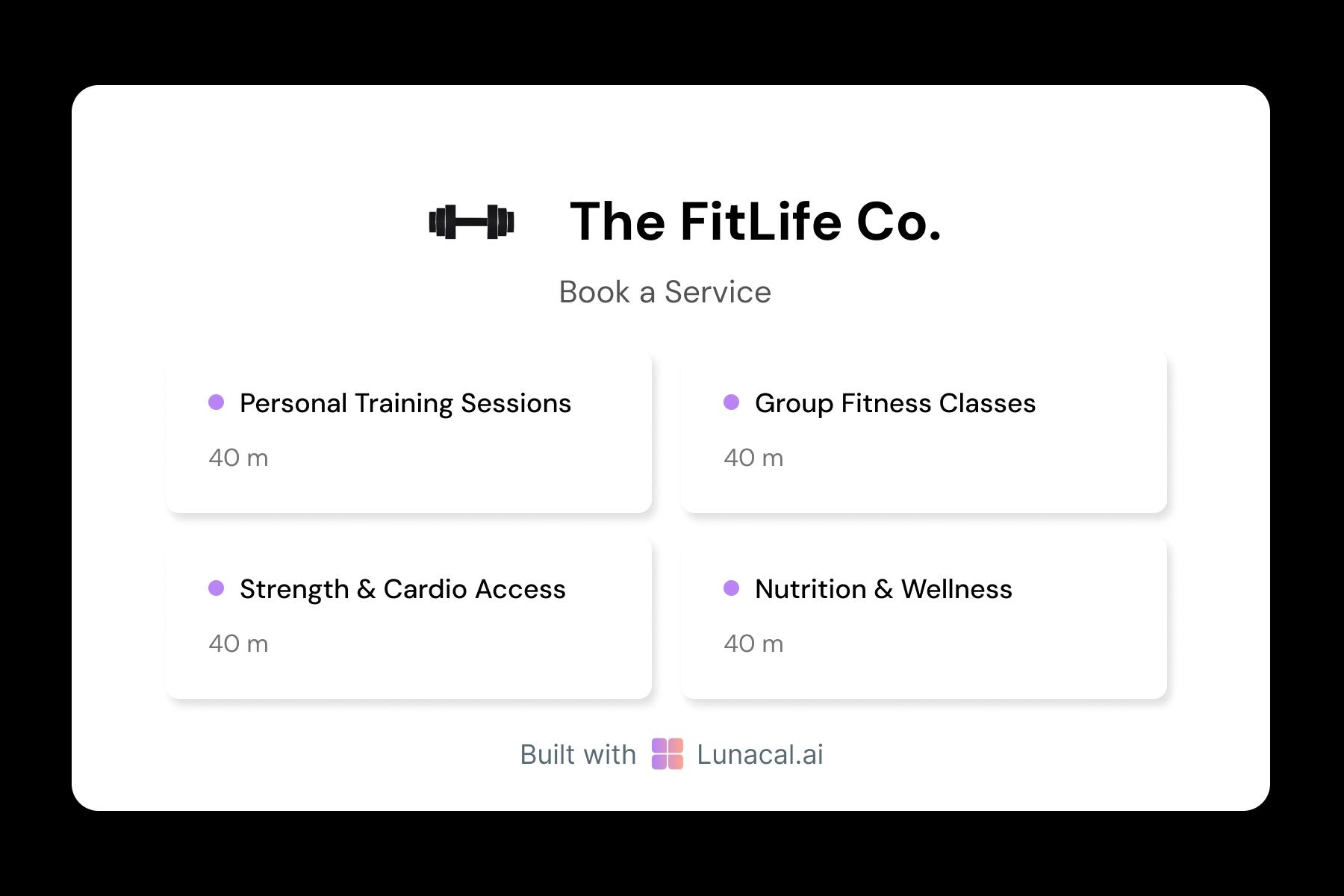
If you run a studio or share leads across coaches, round-robin prevents the same trainer getting overloaded while another has empty hours. New bookings go to the next available coach automatically, which speeds up response time and helps clients start sooner, especially during January and summer rushes.
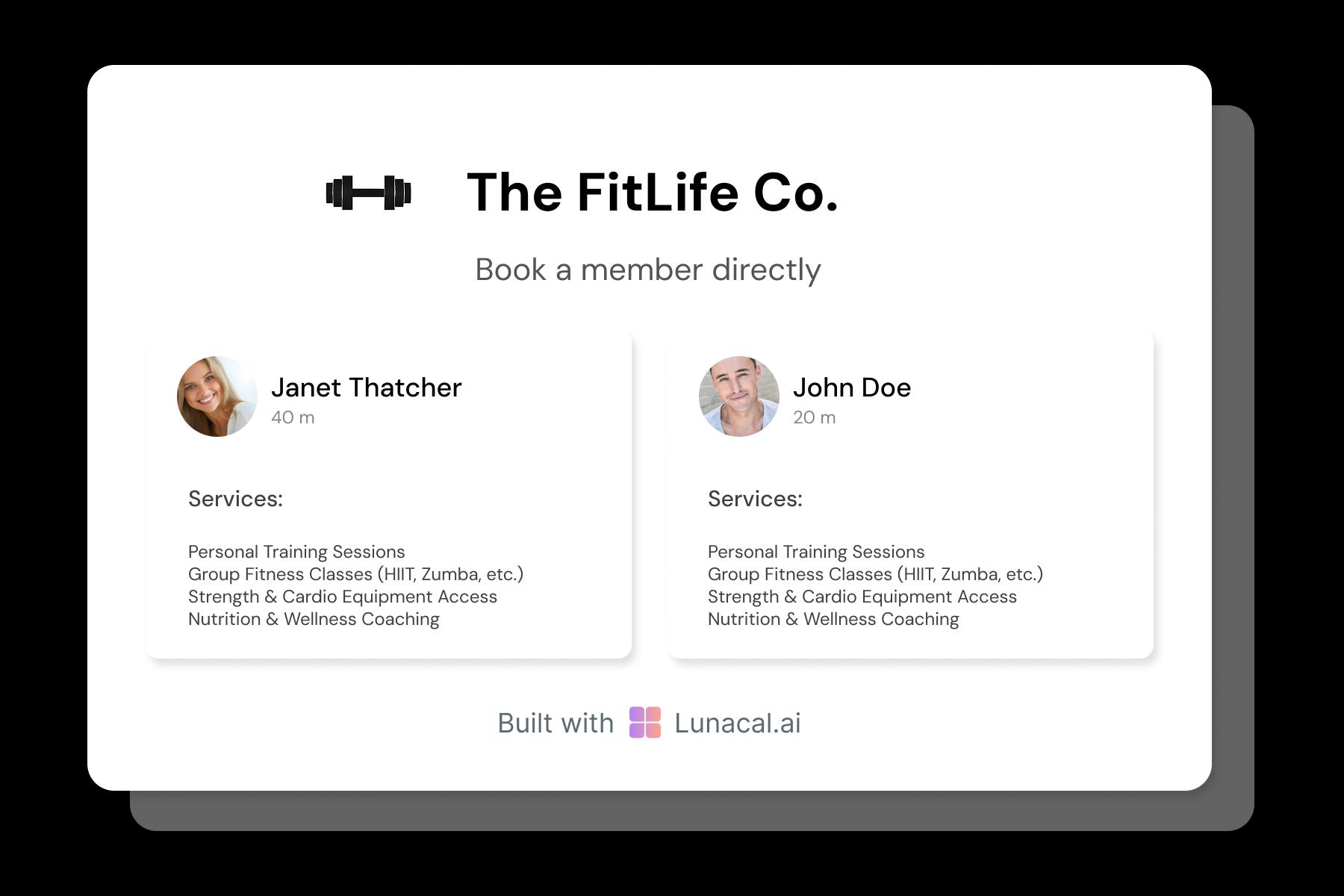
Help clients choose the right coach for their goals
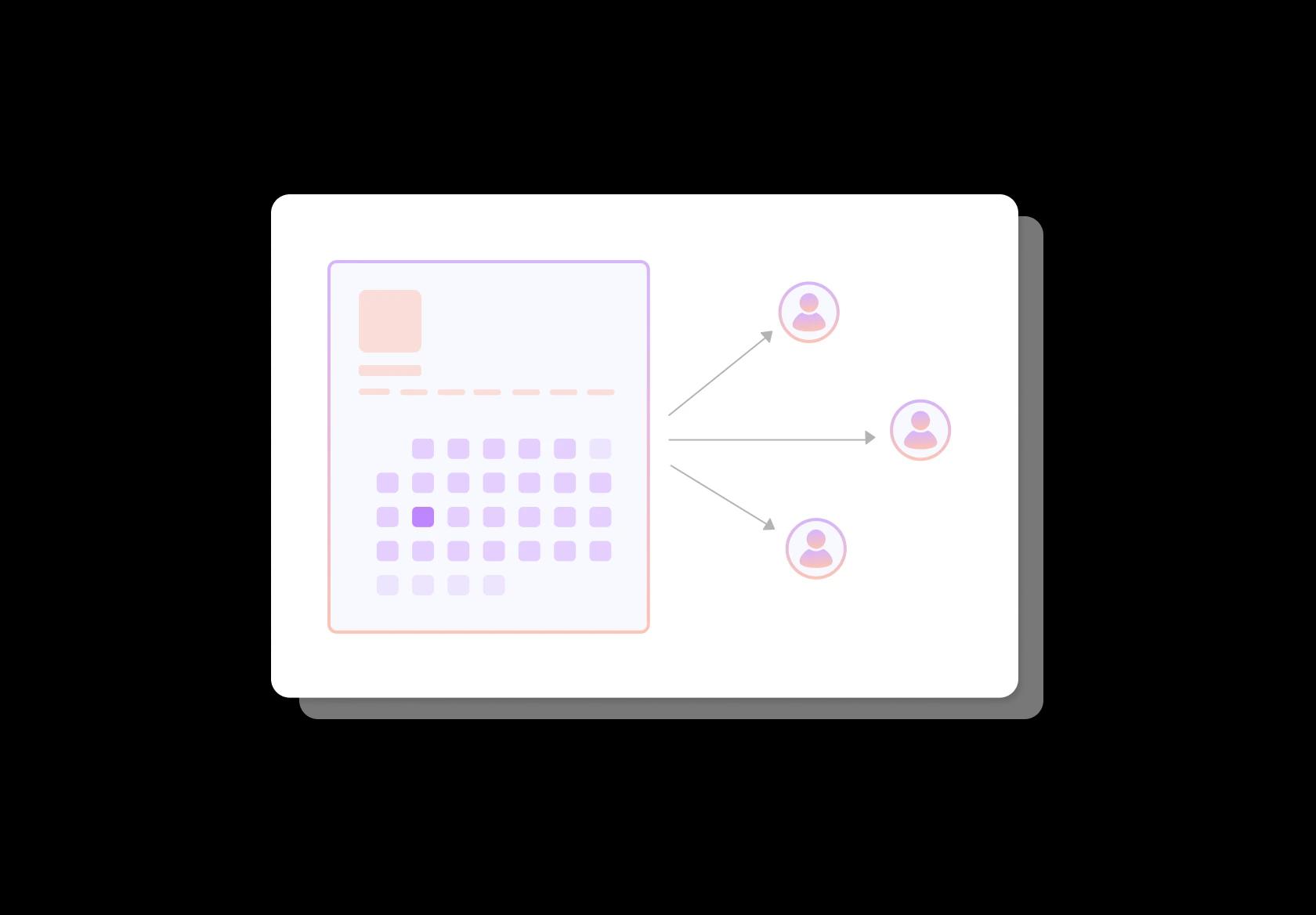
“Pick a trainer” should feel like choosing a fit, not guessing. Let each coach show certifications, specialties (strength, mobility, prenatal, rehab, athletes), coaching style, and a few lines of philosophy. When clients choose based on fit, retention goes up and refund conversations go down.
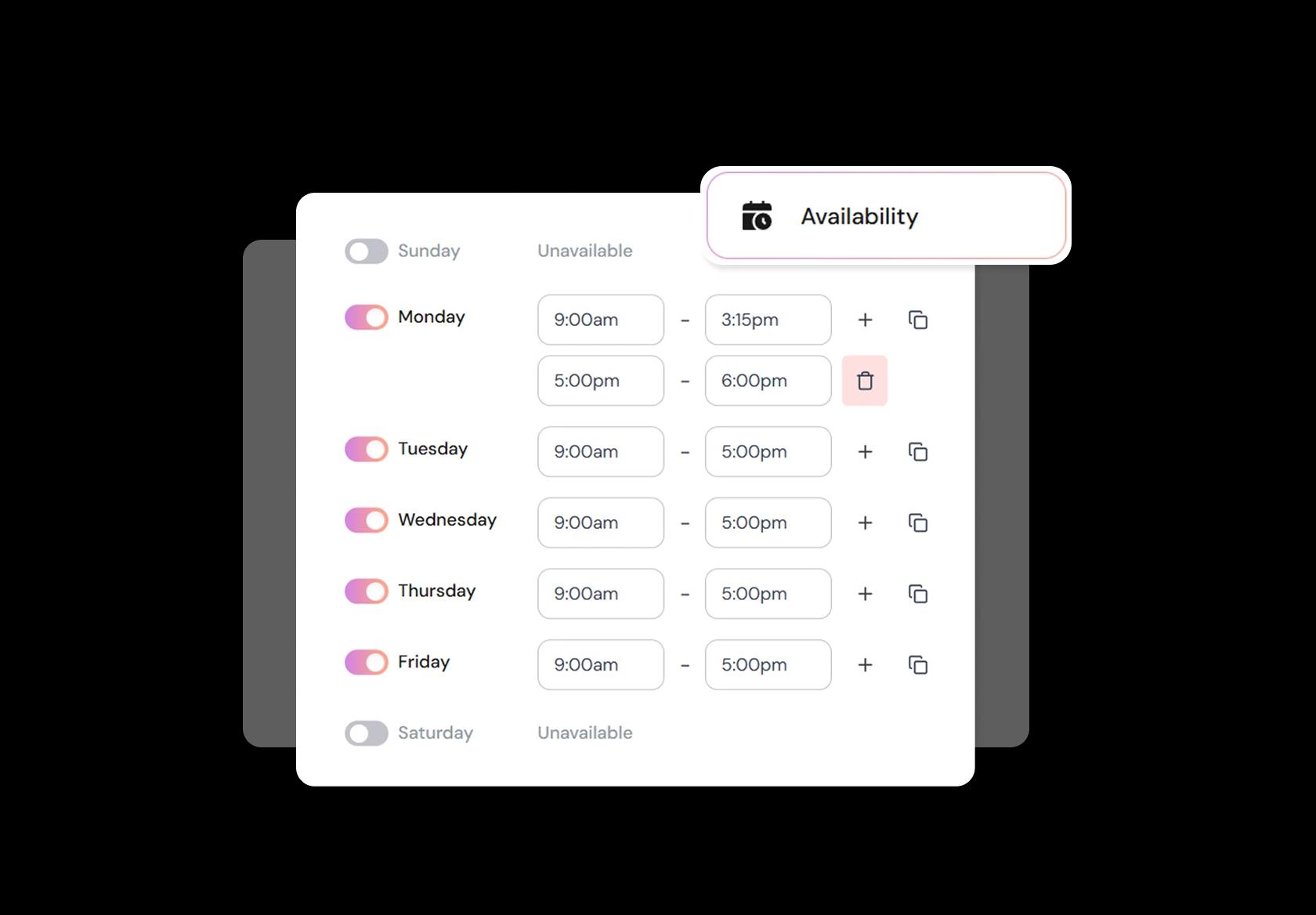
Control hours, buffers, breaks, and minimum notice
Trainers burn out when calendars run their life. Set working hours, add breaks between sessions, require minimum notice, and block days for travel or admin. Great personal trainer scheduling software lets you change availability quickly, without rebuilding your setup every time your week changes.
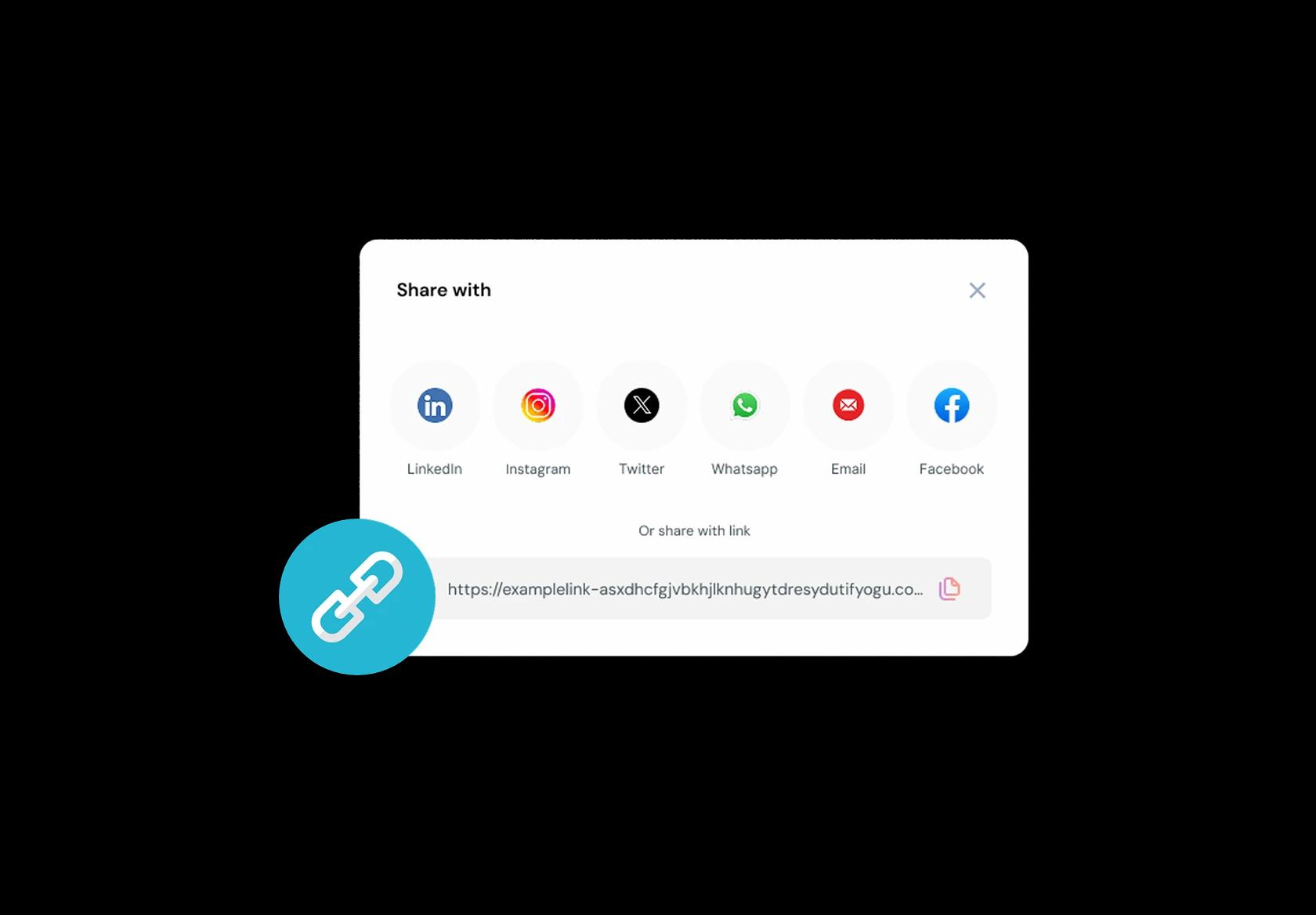
One booking link for Instagram, WhatsApp, and referrals
Clients find you in a dozen places: Instagram bio, WhatsApp referrals, a gym’s website, Google Business Profile, or a group chat. One link should handle all of it. With the right personal training booking software, they land on a clear page with services, pricing, and available times, and book without messaging you first.
No commission, No license fees.
Just simple, fair pricing
(save upto 20%)
Standard
- Unlimited Calendars & Services
- Connect Online Meeting Tool
- Payments via Stripe, PayPal
- Text / Email Reminders
- Customize your booking page
Teams
- All Standard Features
- Teams Scheduling
- Multi-session Packages
- Round-robin Scheduling
- Webhooks
Enterprise
- AI Voice Agent
- Account Manager
- Complete Branding
- MCP Server (Beta)
- SSO




Personal Training Appointment Booking Playbook
This playbook is a practical setup checklist for personal training booking software, built around what actually breaks a trainer’s calendar: mismatched session lengths, flaky clients, messy payments, and zero-shows.
Define your training menu like a program, not a price list
Your personal training booking software should make it hard for a client to book the “wrong thing.” Clear services reduce confusion and save you from endless DMs.
- Create separate services for 30, 45, and 60 minutes instead of one generic “PT session.”
- Add distinct options for 1:1, 2:1 (buddy training), small group, online training, and in-person training.
- If you do assessments, add a “First Session Assessment” that’s longer and includes screening questions.
- Name sessions globally: “Strength Training,” “Fat Loss Coaching,” “Mobility Session,” “Sports Conditioning,” instead of local slang.
Set availability rules that protect your energy (and your commute)
Trainers burn out when the calendar looks “available” but the day becomes physically impossible to deliver.
- Set working hours and hard days off first. Then add buffer rules, not the other way around.
- Add travel buffers between in-person sessions if you train at multiple locations.
- Use minimum notice periods for same-day bookings so you don’t get surprised at 9 AM with a 10 AM client.
- Use maximum advance booking rules if your schedule changes weekly (common for trainers who coach classes too).
Collect the right intake info before the session, not during it
A personal trainer scheduling software setup is “high quality” when it captures the few details that change training safety and session structure.
- Goal and primary motivation: strength, fat loss, rehab-style training, endurance, sport performance.
- Injury history and pain triggers: back, knee, shoulder, ankle, post-surgery constraints.
- Training experience level: beginner, intermediate, advanced.
- Equipment access: gym membership, home equipment, none.
- Preferred training style: heavy lifting, HIIT, mobility, low-impact, bodybuilding.
- Any medical flags they want you to know (with a simple disclaimer that you’re not a medical provider).
Use packages and memberships in a way clients actually follow
Personal training booking becomes predictable when clients commit to blocks of sessions instead of buying one session at a time.
- Offer a small set of packages: 4 sessions, 8 sessions, 12 sessions (or monthly membership), so choice doesn’t overwhelm.
- Set expiry rules that are fair and clear (for example, 8 sessions valid for 8–12 weeks).
- If you sell transformations, separate “training sessions” from “program check-ins” so clients don’t book the wrong slot.
- Make it easy to see remaining credits and book the next session in one click.
Make payment and cancellation policies visible at booking time
Most “no-show problems” are really “policy visibility problems.” Your PT booking system should show rules before confirmation.
- For high-demand times, require prepayment or a deposit to reduce last-minute drop-offs.
- Keep cancellation rules short: how many hours notice, what happens to the fee, how rescheduling works.
- Use a late-arrival rule that protects other clients without sounding aggressive.
- If you do group training, state minimum attendees and what happens if the group size isn’t met.
Build reminders that match how people forget fitness appointments
People rarely forget because they’re malicious. They forget because training isn’t always the top priority at 7 AM.
- Send an instant confirmation with the session type, location, and what to bring.
- Send one reminder the day before, and one a few hours before, especially for early-morning sessions.
- Include a reschedule link in reminders so clients don’t ghost when plans change.
- If sessions are online, include the video link and timezone in every reminder.
Handle location, online links, and timezones without confusion
Global audiences book across timezones, and trainers often deliver both online and in-person. Your personal trainer booking software should make this boringly reliable.
- Create separate session types for in-person and online so logistics don’t get mixed.
- For in-person sessions, collect location preference: gym name, home visit, outdoor, or “trainer chooses.”
- For online sessions, auto-attach a meeting link and include it in confirmations and reminders.
- Show the client’s timezone clearly during booking and in emails to prevent mismatched start times.
Make rescheduling frictionless, but controlled
If rescheduling is painful, clients cancel. If rescheduling is unlimited, your calendar becomes unstable.
- Allow self-rescheduling up to a cutoff time (for example, 12–24 hours before).
- Limit the number of reschedules per session if you’ve had issues with repeat shuffling.
- Keep a waitlist option for peak hours so cancellations can be refilled quickly.
- For packages, let clients move sessions while keeping expiry rules consistent.
Team setup for studios with multiple trainers
If you run a studio, “team scheduling” is where most booking systems fall apart in real life.
- Let clients choose a specific trainer or pick “earliest available” to maximize conversion.
- Restrict certain services to specific trainers if skill level matters (rehab-style, Olympic lifting, pre/postnatal).
- Use round-robin only when trainers have similar offerings and availability patterns.
- Allow internal notes per booking so trainers can prep without exposing sensitive info to clients.
Track the few metrics that actually improve your calendar
Most trainers don’t need dashboards. They need a few signals that tell them what to fix.
- No-show rate by session type and time of day.
- Cancellation window: how many cancellations happen inside 24 hours.
- Package conversion rate: one-off clients who become package clients.
- Peak slot utilization: are your best hours being filled with your best-fit sessions.
Copy-paste policies you can add to your booking page
These are simple, global-friendly templates you can adapt inside your personal training appointment booking flow.
- Late arrival: “If you arrive late, we may need to shorten the session to keep the next client on time. Full session fees still apply.”
- Cancellation: “Please reschedule at least 24 hours in advance. Late cancellations may be charged or deducted from your package.”
- Safety note: “If you have pain, dizziness, or a medical concern, please tell your trainer before we start. Training is not medical treatment.”
- What to bring: “Water, a towel, and comfortable shoes. For online sessions, have enough space to move safely.”
Authored & Reviewed by:
Pranshu Kacholia is the founder of Lunacal.ai, a calendar scheduling and appointment booking system. He works directly with businesses of all sizes to improve booking outcomes - reducing no-shows, cutting back-and-forth, and making scheduling more reliable and efficient. His day-to-day includes reviewing real scheduling setups and edge cases: complex availability and buffers, time zones, routing, cancellation/rescheduling rules, paid meetings and deposits, reminder workflows, and integrations with calendars and meeting tools. He regularly shares appointment scheduling best practices through interviews and community conversations (see this interview and this discussion) and also writes about calendar scheduling (read the article on Medium). He has first-hand experience of using 40+ scheduling tools such as calendly, acuity scheduling, vagaro, fresha, tidycal, square, setmore etc. and understands product nuances deeply.
Lunacal.aiCalendlyAcuity SchedulingSquare AppointmentsSetmoreDoodleBooksyMindbodyFreshaSimplyBook.meHoneyBook


